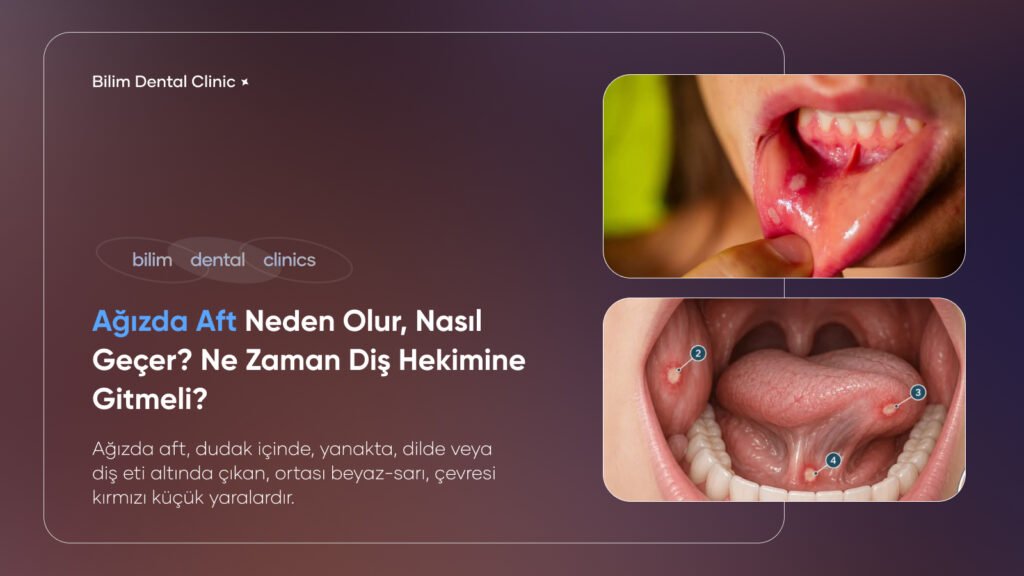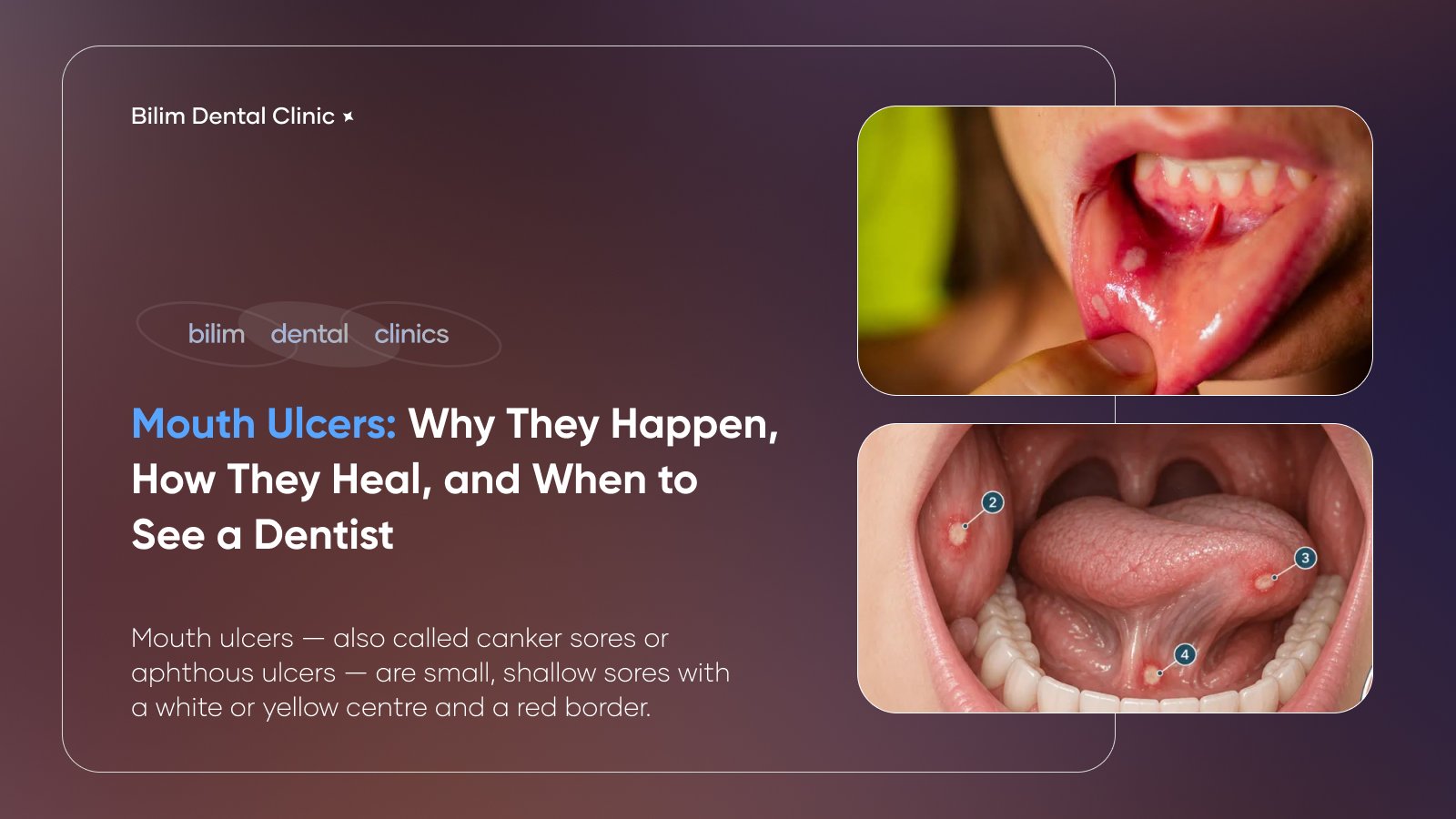
Mouth ulcers — also called canker sores or aphthous ulcers — are small, shallow sores with a white or yellow centre and a red border. They appear on the inside of the lips, the cheeks, the tongue, or beneath the gums. Most are only a few millimetres across, yet they can make eating, talking, and …
Mouth ulcers — also called canker sores or aphthous ulcers — are small, shallow sores with a white or yellow centre and a red border. They appear on the inside of the lips, the cheeks, the tongue, or beneath the gums. Most are only a few millimetres across, yet they can make eating, talking, and even brushing your teeth surprisingly painful.
Mouth ulcers are among the most common problems inside the mouth, and most people experience at least one during their lives. For some, they return several times a year or even every month. The good news is that the vast majority are harmless and heal on their own. Occasionally, however, recurring or persistent sores can be the first sign of another health issue.
In this article, the dentists at Bilim Dental Clinic in Maltepe, Istanbul explain why these sores develop, what helps them heal more comfortably, and when you should arrange an examination without waiting.
What Are Mouth Ulcers?
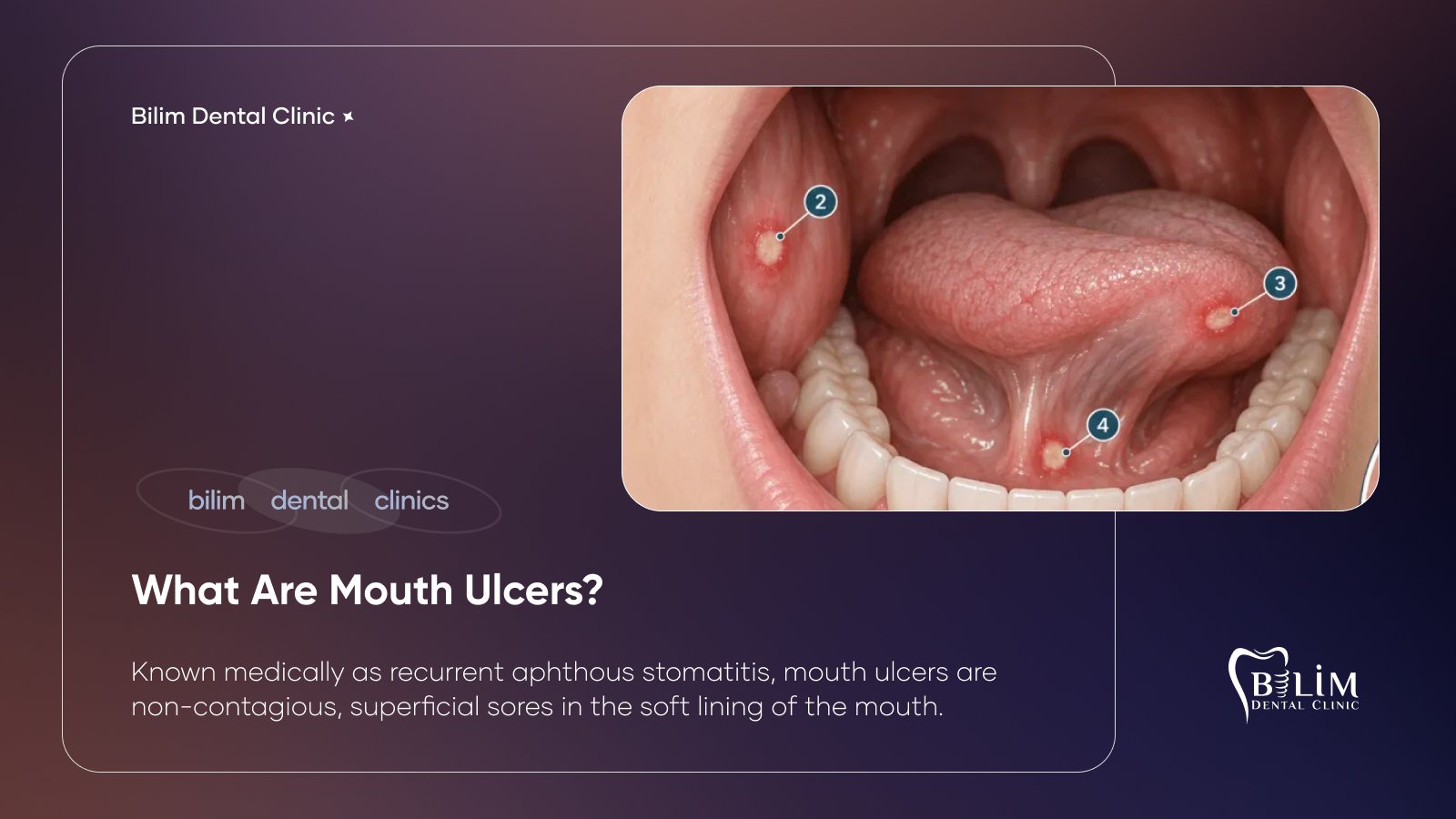
Known medically as recurrent aphthous stomatitis, mouth ulcers are non-contagious, superficial sores in the soft lining of the mouth. They usually begin with a burning or tingling sensation a day before a round or oval, shallow sore appears.
There are three types:
Minor ulcers: by far the most common. They are under 1 cm across and heal without scarring in roughly 7 to 14 days.
Major ulcers: larger (over 1 cm) and deeper. They can take several weeks to heal, may leave a scar, and can be accompanied by fever or tiredness.
Herpetiform ulcers: despite the name, these have nothing to do with the herpes virus. They appear as clusters of pinhead-sized sores — sometimes dozens — that can merge into a larger area.
Canker Sore or Cold Sore? The Difference
Ulcers and cold sores are often confused, yet their causes, locations, and treatments differ.
| Feature | Mouth Ulcer (Canker Sore) | Cold Sore (Herpes) |
|---|---|---|
| Cause | Not fully understood; immune response, trauma, deficiencies | Herpes simplex virus |
| Contagious | No | Yes |
| Location | Movable tissue inside the mouth: inner lip, cheek, under the tongue | Usually on or around the lips; sometimes hard palate or attached gum |
| Appearance | One or a few shallow sores with a white-yellow base | Clusters of fluid-filled blisters that later crust |
| First sign | Burning or stinging | Tingling or itching |
| Healing | 1–2 weeks for minor ulcers | Usually 7–10 days |
| Treatment approach | Symptom relief, controlling triggers | Antiviral treatment when needed |
The distinction matters because cold sores are contagious and spread through close contact. If you are unsure which you have, ask your dentist to take a look.
What Causes Mouth Ulcers?
The exact cause of mouth ulcers is still not fully understood, but an exaggerated immune response in the lining of the mouth appears to play a central role. Many triggers have been identified:
Physical trauma: biting your cheek or lip, brushing too hard, a sharp tooth edge, a broken filling, braces, or an ill-fitting denture. Orthodontic wax is very helpful for patients wearing braces; our orthodontic treatment team can also adjust wire ends that irritate.
Stress and lack of sleep: exam periods, heavy workloads, and irregular sleep are frequently linked to flare-ups.
Nutritional deficiencies: iron, vitamin B12, and folic acid deficiencies are found significantly more often in people with recurrent ulcers. A simple blood test is often revealing.
Hormonal changes: some women notice ulcers recurring with their menstrual cycle.
Certain foods: acidic fruit (lemon, orange, pineapple), tomatoes, chocolate, nuts, and spicy food can act as triggers.
Toothpaste ingredients: sodium lauryl sulphate (SLS) has been linked to more frequent ulcers in some people. If you get them often, an SLS-free toothpaste is worth trying.
Some medications: certain painkillers and blood pressure medicines can cause sores in the mouth.
Systemic conditions: coeliac disease, inflammatory bowel disease, and Behçet’s disease can all involve recurrent ulcers.
Recurrent Ulcers and Behçet’s Disease
Behçet’s disease was first described by the Turkish physician Professor Hulusi Behçet, and Turkey is among the countries where it is most common. That gives recurrent ulcers particular significance for patients here.
In Behçet’s disease, oral ulcers occur in almost every patient and are often the first sign. But ulcers alone do not mean Behçet’s: ulcers are very common, while Behçet’s is rare. What matters are the other signs that may accompany them:
- Recurrent genital sores
- Red, painful eyes or blurred vision
- Acne-like skin lesions or red, painful lumps on the legs
- Joint pain
If any of these accompany your recurrent ulcers, see a dermatologist or rheumatologist. Eye symptoms need urgent assessment.
How Long Do They Take to Heal?
Most minor mouth ulcers heal on their own within 7 to 14 days, even without treatment. The first three or four days are the most painful; after that the sore shrinks and the pain eases considerably.
Major ulcers can take from two weeks to several weeks. Herpetiform ulcers generally clear within one to two weeks, but tend to recur.
There is no guaranteed way to speed up healing, but the right care reduces pain and stops the sore being irritated again.
How to Treat Mouth Ulcers: 7 Soothing Remedies
- Salt water or bicarbonate rinses: half a teaspoon of salt or bicarbonate of soda in a glass of warm water, several times a day, keeps the area clean.
- A soft toothbrush: avoid knocking the sore with bristles and approach the area gently. Our guide to toothbrush replacement and brushing technique explains how to choose one.
- Avoid trigger foods: acidic, spicy, very hot, and hard foods irritate the sore. Choose yoghurt, puddings, and lukewarm soups.
- Protective gels from the pharmacy: products that form a barrier over the sore can reduce pain while eating.
- Local anaesthetic products: these give short-term relief; follow the instructions, and do not use them on babies or young children without medical advice.
- Cold therapy: holding ice wrapped in a cloth against the outside of the cheek — not directly on the sore — can ease the pain.
- Drink plenty of water: a moist mouth supports healing.
For people with frequent or severe mouth ulcers, a dentist or doctor may prescribe steroid-based oral preparations, medicated mouthwashes, or treatment directed at the underlying cause. These should not be used without a prescription.
What to avoid: applying lemon, alcohol, vinegar, or bicarbonate powder directly to the sore, trying to “burn” it, or dabbing it with alcohol-based products all irritate the tissue and delay healing.
Other Sores That Can Be Mistaken for Ulcers
Not every sore in the mouth is an aphthous ulcer. Common look-alikes include:
Traumatic sores: from a burn, an accidental bite, or a sharp piece of food. The cause is obvious and they usually heal within days.
Denture sores: caused by an ill-fitting denture pressing on the same spot. They will not heal until the denture is adjusted; see our dental prosthesis page for more.
Lichen planus: a chronic condition with white, lace-like lines or red, tender areas inside the mouth. It needs monitoring.
Oral thrush: white patches that can be wiped away, common in babies, denture wearers, and people with weakened immunity.
Hand, foot and mouth disease: a viral infection in children, with mouth sores plus a rash on the hands and feet.
Suspicious lesions: painless, hard, raised, or irregular sores lasting more than three weeks must be examined.
If you are unsure what a sore is — especially if it keeps coming back or will not heal — an examination is the safest option.
Eating Well While You Heal
Eating can be difficult during a flare-up, but good nutrition supports healing:
- Choose lukewarm soups, yoghurt, puddings, and purées
- Pause acidic fruit, tomatoes, and pickles for a few days
- Avoid crisps, crackers, and toast with sharp edges
- Limit very spicy and salty food
- Drinking through a straw can reduce contact with the sore
- Rinse with lukewarm water after meals
These restrictions are temporary. If ulcers recur often, make sure your everyday diet provides enough iron, vitamin B12, and folic acid.
When Should You See a Dentist or Doctor About Mouth Ulcers?
Most mouth ulcers are harmless, but arrange an assessment without delay if you have:
- A sore that has not healed after three weeks
- Sores larger than 1 cm or getting bigger
- Ulcers that recur many times a year
- A painless, hard sore with irregular edges
- Fever, fatigue, weight loss, or swelling in the neck
- Difficulty swallowing or keeping fluids down
- Genital sores, eye symptoms, or a skin rash
- Sores that always appear in the same spot where a tooth or denture rubs
The three-week rule is especially important. Rarely, a sore that will not heal is an early sign of a serious condition such as oral cancer. Early examination matters most for smokers, people who drink alcohol, people over 40, and anyone with a painless, hard-edged sore. You can book an assessment through our contact page.
If there are widespread sores with fever and the person — particularly a young child — cannot swallow or keep fluids down, go to a hospital emergency department without waiting.
What Does a Dentist Do?
Many people do not think of a dentist for mouth ulcers, yet dentists examine the lining of the mouth more often and more closely than any other clinician, and they can remove the local causes directly.
The dentist assesses the appearance, location, and size of the sore and distinguishes an ulcer from a cold sore or another lesion. When sores keep appearing in the same place, the cause is often mechanical — a sharp tooth edge, a broken filling, a rough crown, or an ill-fitting denture — and once it is fixed, the recurrences frequently stop.
Where appropriate, the dentist will refer you for blood tests, or to the relevant specialist if Behçet’s disease is suspected. A biopsy may be needed for a suspicious sore that will not heal, and this is arranged without delay. Keeping your gums healthy also helps, since inflamed gums make the tissues more sensitive — our periodontal treatments page explains more.
Can They Be Prevented?
There is no guaranteed way to prevent mouth ulcers entirely, but most people can reduce how often they occur:
- Note the foods that seem to trigger them and cut back
- Try an SLS-free toothpaste
- Use a soft brush and avoid brushing too hard
- Have sharp tooth edges, broken fillings, and ill-fitting dentures treated
- Manage stress and keep a regular sleep routine
- If they are frequent, have your iron, B12, and folic acid levels checked
Ulcers in Children
Children get mouth ulcers too, often after hurting themselves with a toothbrush or biting their cheek. But sores in a child’s mouth can also signal a viral infection such as hand, foot and mouth disease or herpetic gingivostomatitis, usually with fever, irritability, and refusal to eat.
If your child has several mouth sores with a fever, refuses fluids, or is passing less urine, see a paediatrician promptly. Young children can become dehydrated quickly.
Frequently Asked Questions
Are mouth ulcers contagious?
No. They do not spread through kissing, sharing cups, or close contact. Cold sores do, which is why telling them apart matters.
Why do I always get an ulcer in the same place?
Recurrent sores in the same spot usually point to a mechanical cause such as a sharp tooth edge, a broken filling, or a denture. A dental examination can identify and fix it.
Are mouth ulcers caused by vitamin deficiency?
Not always, but deficiencies in iron, B12, and folic acid are common in people with frequent ulcers. Have a blood test before starting supplements.
Does putting bicarbonate on the sore help?
Rinsing with bicarbonate solution can soothe the mouth, but applying the powder directly to the sore irritates the tissue.
Can an ulcer be a sign of cancer?
A typical aphthous ulcer is not cancer. But any sore lasting more than three weeks, especially if painless, hard, or irregular, must be examined.
Are ulcers normal in pregnancy?
Hormonal changes can make them more frequent for some women. Check with your doctor before using any product.
Which doctor should I see?
A dentist is a good first point of contact for sores inside the mouth. If a systemic cause is suspected, you will be referred to the appropriate specialist.
Can braces cause ulcers?
Brackets and wires can rub the cheeks and lips and cause sores. Orthodontic wax and adjustment of wire ends usually solve the problem.
Does stress really cause mouth ulcers?
Stress is one of the most commonly reported triggers, which is why ulcers often appear during exams or busy periods at work.
Do they leave scars?
Minor ulcers heal without scarring. Large, deep major ulcers can leave a scar.
Mouth Ulcer Assessment at Bilim Dental Clinic in Maltepe
Most mouth ulcers are a nuisance that lasts a week or two, but if they keep coming back or will not heal, your body is telling you something worth investigating. In this article we answered the questions our patients ask most: the causes, the difference from cold sores, soothing remedies, Behçet’s disease, and the three-week rule. You can meet the dentists behind this guide on our team page.
At our clinic, we provide services in all areas of oral and dental health — from aesthetic dentistry and implant treatments to orthodontics and prosthetic applications — using modern technology and evidence-based, scientific approaches. Our experienced team of dentists creates a personalized treatment plan for every patient, aiming to build healthy, natural, and aesthetic smiles.
The dentists who will accompany you throughout this process:
- Dt. Ali Enes Öztürk
- Dt. Salman Taştan
- Dt. Hüseyin Kaya
- Uzm. Dt. Burak Güleç (Orthodontics Specialist)
- Dt. Cem Karaman
- Dt. Ayşe Sizer Çakar
- Dt. Zeynep Ece Okur (Pediatric Dentist)
For sores that will not heal or keep returning, we invite you to visit Bilim Dental Clinic on Bağdat Caddesi in Maltepe, Istanbul. You can follow our latest updates on our Instagram account.
WhatsApp: +90 538 977 89 01