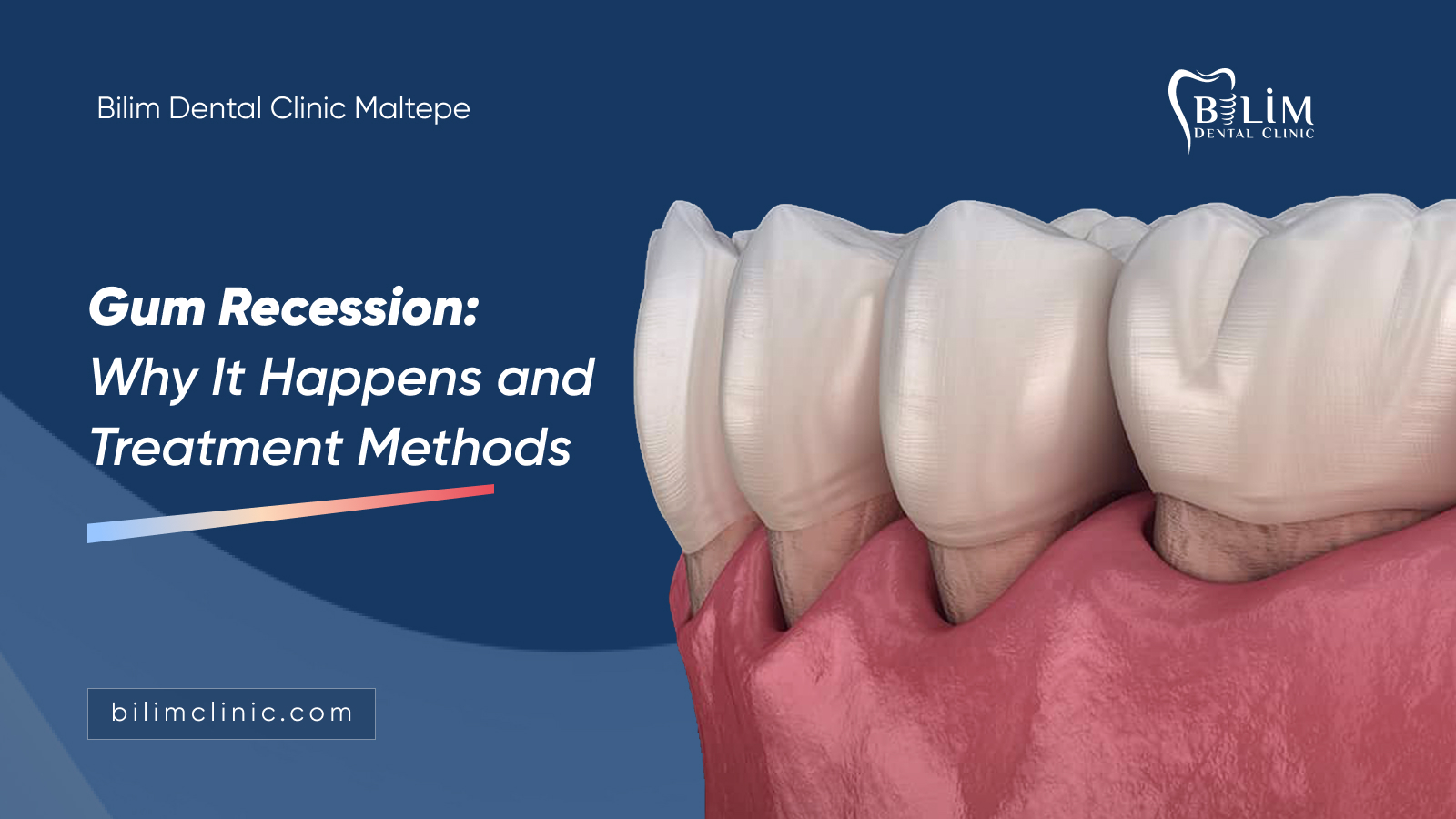
Have you noticed that your teeth look longer than they used to, or that a tooth has become sensitive to cold water? These are often the first signs of gum recession — a condition where the gum tissue surrounding the teeth pulls back, exposing more of the tooth or its root. Gum recession develops slowly …
Have you noticed that your teeth look longer than they used to, or that a tooth has become sensitive to cold water? These are often the first signs of gum recession — a condition where the gum tissue surrounding the teeth pulls back, exposing more of the tooth or its root. Gum recession develops slowly and often painlessly, which is why many patients only notice it once sensitivity or an aesthetic change appears.
The important thing to know is this: receded gum tissue does not grow back on its own, but the condition can be stopped, and in many cases the lost tissue can be restored with modern gum recession treatment. In this article, the dentists at Bilim Dental Clinic in Maltepe, Istanbul explain why gums recede, which symptoms to watch for, and which gum recession treatment methods are used today.
What Is Gum Recession?
Gum recession (gingival recession) is the gradual loss of gum tissue along the gum line. As the gums pull away, the root surface of the tooth becomes exposed. Unlike the crown of the tooth, the root is not covered by protective enamel — which is why exposed roots are more sensitive and more vulnerable to decay.
Left untreated, gum recession can progress and contribute to loosening of the teeth, root decay, and in advanced cases, tooth loss. Early diagnosis makes gum recession treatment simpler and more successful.
Why Does Gum Recession Happen? 7 Common Causes
Gum recession rarely has a single cause. In most patients, several of the following factors act together — and identifying them is the first step of any successful gum recession treatment:
Gum Disease (Periodontitis)
The most common cause. Bacterial plaque that is not removed hardens into tartar, inflaming the gums (gingivitis). If the inflammation progresses, it destroys the gum tissue and the bone supporting the teeth, and the gums recede.
Aggressive Brushing
Brushing too hard, or using a hard-bristled toothbrush, physically wears away the gum tissue over time. Ironically, some of the most recession-prone patients are those who brush the most enthusiastically.
Teeth Grinding and Clenching (Bruxism)
Excessive biting forces place stress on the teeth and their supporting tissues, which can accelerate gum and bone loss.
Misaligned Teeth and Bite Problems
Crowded or poorly positioned teeth can concentrate chewing forces on certain areas, making the gum tissue there more likely to recede.
Smoking and Tobacco Use
Tobacco reduces blood flow to the gums, weakens the tissue’s ability to heal, and significantly increases the risk of gum disease.
Genetics and Thin Gum Tissue
Some people naturally have thinner, more fragile gum tissue and are more prone to recession regardless of how well they care for their teeth.
Other Factors
Hormonal changes (pregnancy, menopause), oral piercings that rub against the gums, and poorly fitting restorations can also contribute.
Stages of Gum Recession: Why Severity Matters
Not every case of gum recession is the same, and the stage of the condition directly determines which gum recession treatment will be recommended. In clinical practice, dentists evaluate how far the gum margin has moved, whether the tissue between the teeth (the papilla) has been lost, and whether the underlying bone is affected.
In mild cases, only a small strip of root surface is exposed and the surrounding tissues are healthy. These cases respond very well to conservative care, and root coverage procedures — when needed — have a high success rate. In moderate cases, the recession extends further toward the mobile gum tissue, and treatment planning becomes more detailed. In advanced cases, where bone and inter-dental tissue have also been lost, complete root coverage may no longer be possible; the goal of gum recession treatment then shifts to stopping the progression, protecting the remaining tissue, and reducing sensitivity.
This is exactly why waiting is the worst strategy with receding gums. A case that could be resolved with a simple deep cleaning this year may require graft surgery a few years later. The earlier you are examined, the more options you have — and the simpler and more affordable those options are.
Symptoms: How Do You Recognize Receding Gums?
- Teeth that appear longer than before
- Sensitivity to cold, hot, sweet, or sour foods
- A visible notch or color difference near the gum line
- Gums that bleed during brushing or flossing
- Red, swollen, or tender gums
- Bad breath that does not improve with brushing
If you notice one or more of these signs, a periodontal examination is the right first step.
Gum Recession Treatment Methods
The right treatment depends on the cause and severity of the recession. At Bilim Dental Clinic, periodontal treatmentalways begins with a detailed periodontal examination to identify what is driving the recession — because treating the symptom without removing the cause leads to recurrence. The main gum recession treatment options used today are summarized below:
| Treatment | What It Involves | Best Suited For |
|---|---|---|
| Scaling and root planing | Deep cleaning that removes plaque and tartar above and below the gum line, then smooths the root surfaces | Early-stage recession caused by gum disease |
| Desensitizing agents and fillings | Sealing exposed root surfaces to reduce sensitivity and protect against decay | Mild recession with sensitivity complaints |
| Gum graft surgery | A small piece of tissue (usually from the palate) is placed over the exposed root to rebuild the gum line | Moderate to advanced recession; the most predictable long-term result |
| Pinhole technique | The gum is gently loosened through a tiny entry point and repositioned over the root, without grafts or sutures | Suitable cases where a minimally invasive option is preferred |
| Night guard / bite adjustment | Reducing the forces caused by grinding or an uneven bite | Recession linked to bruxism or malocclusion |
| Orthodontic treatment | Correcting the position of teeth that concentrate force on the gums | Recession related to crowded or misaligned teeth |
Non-Surgical Gum Recession Treatment
In early cases, professional cleaning combined with corrected brushing technique is often enough to stop the recession from progressing. Your dentist may also apply fluoride or desensitizing agents to relieve sensitivity on exposed roots.
Surgical Gum Recession Treatment
When a significant amount of tissue has been lost, surgical procedures such as gum grafting can cover the exposed roots, reduce sensitivity, and restore a natural-looking gum line. These procedures are performed under local anesthesia, and most patients return to their normal routine within a few days. The suitability of each technique varies from patient to patient, so your dentist will recommend the option that fits your specific situation.
What Happens at Your First Gum Recession Treatment Appointment?
Many patients delay seeing a dentist because they are unsure what to expect. The first appointment is straightforward and painless. Your dentist will examine your gums visually, measure the depth of the pockets around each tooth with a small periodontal probe, and assess how much root surface is exposed. X-rays may be taken to evaluate the level of the supporting bone.
Just as importantly, your dentist will look for the cause: your brushing technique, signs of grinding, the position of your teeth, the condition of any fillings or crowns near the gum line, and your overall gum health. Based on these findings, a personalized gum recession treatment plan is prepared — starting with the least invasive option that fits your situation. Nothing is done without explaining the alternatives, the expected outcome, and the cost beforehand.
Recovery and Aftercare After Gum Recession Treatment
Recovery depends on the procedure performed. After a deep cleaning, most patients feel only mild sensitivity for a day or two. After graft surgery, the treated area is protected for the first weeks: patients are advised to avoid brushing the surgical site directly, eat soft foods, avoid smoking, and use the mouth rinse prescribed by their dentist.
A few practical points make recovery smoother:
- Apply a cold compress on the first day to reduce swelling
- Avoid hot, hard, acidic, and crunchy foods for the first several days
- Do not pull your lip to “check” the area — this can disturb the healing tissue
- Take any prescribed medication exactly as directed
- Attend your follow-up appointments so healing can be monitored
Most patients return to work or school within a few days. Long-term success, however, depends on maintenance: gentle brushing with a soft brush, daily flossing, and regular professional cleanings. Without these habits, the conditions that caused the recession in the first place can return.
How Much Does Gum Recession Treatment Cost?
The cost of gum recession treatment varies widely because it depends on the stage of the recession, the number of teeth involved, and the technique used. A deep cleaning for early-stage recession is a routine, modestly priced procedure, while graft surgery covering multiple teeth naturally costs more. Rather than relying on generic price lists online, the healthiest approach is a clinical examination — at Bilim Dental Clinic, treatment fees are always explained transparently after the examination, before any procedure begins. It is also worth remembering that early treatment is almost always less costly than managing the consequences of advanced recession, such as root decay or tooth loss.
When Should You See a Dentist?
You do not need to wait for pain. Make an appointment if you notice that your gum line has visibly moved, if a tooth has become sensitive to cold, if your gums bleed regularly when brushing, or if a tooth starts to look longer than its neighbors. Even if none of these apply, a check-up every six months allows your dentist to catch early recession that you cannot see or feel yourself — often before any gum recession treatment beyond a professional cleaning is needed.
Can Receding Gums Grow Back on Their Own?
No — this is one of the most common misconceptions. Gum tissue does not regenerate by itself, and no toothpaste or home remedy can rebuild it. What home care can do is stop the recession from getting worse. Restoring lost tissue requires professional gum recession treatment.
Gum Recession and Your Overall Health
Gum health is closely connected to general health, and this connection works in both directions. Conditions such as uncontrolled diabetes can make gum tissue more vulnerable to inflammation and slower to heal, which is why your dentist will ask about your medical history before planning gum recession treatment. Certain medications that cause dry mouth can also increase plaque accumulation and indirectly contribute to gum problems.
On the other side of the equation, chronic gum inflammation is associated in research with broader health concerns, including cardiovascular conditions. While gum recession itself is a local problem, the gum disease that often drives it is not something to ignore. Treating your gums is an investment in more than just your smile.
There is also an aesthetic dimension that affects daily life more than many people expect. Receded gums can make the smile look aged, create dark triangular gaps between teeth, and cause patients to hide their smile in photographs or conversation. Patients who complete gum recession treatment frequently tell us that the change in their confidence was as valuable as the relief from sensitivity.
Gum Recession Around Crowns, Veneers, and Implants
A detail that deserves special attention: gum recession does not only affect natural teeth. The gum line around crowns, veneers, and dental implants can also recede — and when it does, the aesthetic result is often more noticeable, because the margin of the restoration or the metal surface of the implant becomes visible.
Poorly fitting restorations that press on the gum, over-contoured crown edges, and inadequate cleaning around implants are common contributing factors. If you notice a dark line appearing at the edge of a crown or the gum pulling away from an implant, have it examined promptly. In these cases, gum recession treatment is planned together with an evaluation of the restoration itself, and sometimes replacing or adjusting the restoration is part of the solution. This is another reason why restorative work should always be done with healthy gums as the foundation.
How to Prevent Gum Recession
- Brush twice daily with a soft-bristled toothbrush, using gentle circular motions
- Floss daily to remove plaque between the teeth
- Have professional cleanings and check-ups every six months
- Quit smoking and tobacco products
- Use a night guard if you grind your teeth
- Treat orthodontic problems rather than living with them
Frequently Asked Questions
Is gum recession treatment painful?
Non-surgical treatments cause little to no discomfort. Surgical procedures are performed under local anesthesia, and post-operative soreness is usually mild and manageable with simple pain relief.
How long does recovery take after surgical gum recession treatment?
Initial healing typically takes one to two weeks, and most patients return to daily activities within a few days. Full tissue maturation continues over the following weeks.
At what age does gum recession occur?
It becomes more common with age, but it is not only an older person’s problem — aggressive brushing, orthodontic issues, and genetics can cause recession in patients in their twenties and thirties.
Does gum recession treatment hurt afterward?
Post-treatment discomfort is usually mild and short-lived. After surgical procedures, soreness in the first few days is normal and is managed with simple pain relief and cold compresses. Most patients describe the recovery as easier than they expected.
Can gum recession come back after treatment?
The treated area can remain stable for many years, but recession can recur if the original cause is not controlled. This is why gum recession treatment always includes correcting brushing habits, managing grinding, and maintaining regular check-ups — the procedure fixes the damage, and your daily habits protect the result.
Can I have gum recession treatment while wearing braces or aligners?
Yes, in coordination between your orthodontist and periodontist. In some patients, orthodontic treatment itself is part of the solution, because correcting the position of a tooth can relieve the pressure that caused the gum to recede.
Is gum recession dangerous?
Untreated recession exposes the root to decay and can progress to bone loss and loose teeth. Treated early, it is very manageable.
Which doctor treats gum recession?
Gum recession is diagnosed and treated by dentists, and advanced cases are managed within periodontology. You can find more details on our periodontal treatments page and book an examination at our clinic.
Gum Health at Bilim Dental Clinic in Maltepe
 Healthy gums are the foundation of a healthy smile — and consistent daily care is one of the most important steps of a successful gum recession treatment. In this article, we answered the questions our patients ask most about receding gums: from brushing habits and sensitivity to grafting, recovery, and prevention.
At our clinic, we provide services in all areas of oral and dental health — from gum treatments and aesthetic dentistryto implant treatments, orthodontics, and prosthetic applications — using modern technology and evidence-based, scientific approaches. Our experienced team of dentists creates a personalized treatment plan for every patient, aiming to build healthy, natural, and aesthetic smiles.
The dentists who will accompany you throughout this process:
- Dt. Ali Enes Öztürk
- Dt. Salman Taştan
- Dt. Hüseyin Kaya
- Uzm. Dt. Burak Güleç (Orthodontics Specialist)
- Dt. Cem Karaman
- Dt. Ayşe Sizer Çakar
- Dt. Zeynep Ece Okur (Pediatric Dentist)
If you have noticed signs of gum recession, we invite you to visit Bilim Dental Clinic on Bağdat Caddesi in Maltepe, Istanbul for a periodontal examination.
WhatsApp: +90 538 977 89 01 Instagram: instagram.com/bilimdentalclinic