Dry mouth happens when the salivary glands don't make enough saliva to keep the mouth moist. Its medical name is xerostomia. A dry mouth when you are nervous or thirsty is temporary and normal. But when dryness becomes constant, talking, chewing and swallowing get harder, and the teeth lose an important defence against decay. Medicines …
Dry mouth happens when the salivary glands don’t make enough saliva to keep the mouth moist. Its medical name is xerostomia. A dry mouth when you are nervous or thirsty is temporary and normal. But when dryness becomes constant, talking, chewing and swallowing get harder, and the teeth lose an important defence against decay.
Medicines are one of the most common causes of dry mouth. In this article we explain why saliva matters so much for your teeth, what causes dry mouth and how it shows itself, what you can do at home and how Bilim Dental Clinic can help protect your teeth.

How Does Saliva Protect Your Teeth?
We rarely notice saliva, but it quietly does a lot for oral health. According to the US National Institute of Dental and Craniofacial Research (NIDCR), saliva:
- Moistens food and helps break it down.
- Washes food particles away from teeth and gums.
- Makes swallowing easier.
- Contains calcium and phosphate that help keep teeth strong and fight decay.
Mayo Clinic also notes that saliva helps prevent decay by washing away sugar and food particles and making bacteria less harmful. When saliva is reduced, this protection weakens.
Symptoms of Dry Mouth
- A sticky, dry feeling in the mouth
- Thick, stringy saliva
- Difficulty chewing, swallowing, speaking or tasting
- A dry throat or hoarseness
- Cracked lips and sores at the corners of the mouth
- A dry, rough or grooved tongue
- Bad breath
- Problems wearing dentures
- A burning feeling in the mouth or throat

What Causes Dry Mouth?
Medicines: NIDCR states that hundreds of medicines can reduce saliva. The main groups listed by Mayo Clinic include:
- Medicines for depression and anxiety
- Blood pressure medicines
- Some allergy medicines (antihistamines) and decongestants
- Muscle relaxants and some pain relievers
- Medicines for bladder control
Other causes:
- Cancer treatment: Radiotherapy to the head and neck can damage the salivary glands, and chemotherapy can change the amount and nature of saliva.
- Sjögren’s disease and other immune system conditions.
- Diabetes. You can read about diabetes and dental treatment in our article on dental implants for diabetics.
- Nerve damage in the head and neck, after an injury or surgery.
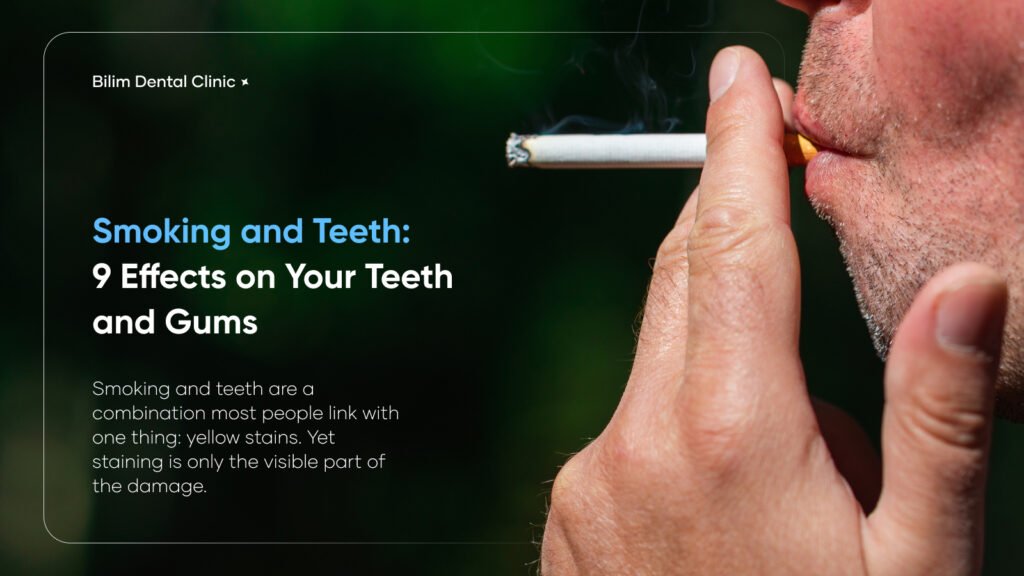
- Smoking, tobacco and alcohol. See our article on smoking and teeth for other effects.
- Snoring and mouth breathing.
- Caffeine: It can dry out the mouth and add to fluid loss.

Is Dry Mouth a Normal Part of Ageing?
Sources put the emphasis differently here. NIDCR clearly states that dry mouth is not a normal part of ageing and advises seeing a dentist or doctor to find the cause. Mayo Clinic notes that dry mouth is more common with age, and that changes in how the body processes medicines, poor nutrition and long-term illness may all play a part.
In short, dry mouth may become more common with age, but it is not something you simply have to accept. The underlying cause can often be found and managed.
How Does Dry Mouth Harm Your Teeth?
When saliva is reduced, the system that rinses and protects the teeth weakens. According to Mayo Clinic, dry mouth can lead to:
- More plaque and tooth decay
- Gum disease
- Mouth sores
- Oral yeast infection (thrush)
- Poor nutrition due to chewing and swallowing problems
That is why preventing decay and catching it early is so important for people with dry mouth. Gum care is covered in our article on periodontal treatments, and sore gums in our article on gum pain relief.

What Helps With Dry Mouth?
NIDCR and Mayo Clinic recommend:
- Sip water throughout the day. NIDCR suggests about 2–3 litres of fluid a day. Drink water or sugar-free drinks with meals too.
- Chew sugar-free gum or suck sugar-free sweets. Products with xylitol may also help prevent decay, although large amounts of xylitol can cause wind or diarrhoea.
- Limit caffeine. Coffee, tea and some fizzy drinks can dry out the mouth.
- Avoid alcohol and tobacco. Don’t use mouthwashes that contain alcohol.
- Avoid sugary and acidic foods. Spicy and salty foods can also sting a dry mouth.
- Use a humidifier in your bedroom at night.
- Breathe through your nose. If snoring makes you breathe through your mouth, have it looked at.
- Keep your lips moisturised.
For snoring and mouth breathing during sleep, our article on snoring and sleep apnoea may help.

What Can Your Dentist and Doctor Do?
Finding the cause: Your doctor or dentist will review your medical history and all the medicines you take, including those bought without a prescription. Blood tests, a saliva test or imaging of the salivary glands may be requested.
Adjusting medication: If a medicine is causing the dryness, your doctor may change the dose or suggest a different medicine that does not cause dry mouth. Don’t stop or change a medicine on your own. Always make that decision with the doctor who prescribed it.
Saliva substitutes: Artificial saliva and moisturising mouth gels and sprays help keep the mouth moist.
Medicines that increase saliva: For severe dryness caused by Sjögren’s disease or head and neck radiotherapy, your doctor may prescribe medicines that help the glands produce more saliva.
Protecting your teeth:
- Brush with fluoride toothpaste and floss.
- Your dentist may recommend prescription fluoride toothpaste, fluoride gel or fluoride trays worn at night.
- See your dentist at least twice a year for check-ups and cleaning. Our guide to toothbrush replacement and brushing technique covers the basics at home.
| What you can do at home | What your dentist or doctor can do | |
|---|---|---|
| Moisture | Sip water, sugar-free gum, humidifier | Artificial saliva, mouth moisturisers |
| Cause | Cut down on caffeine, alcohol and tobacco | Review medicines, run tests |
| Protecting teeth | Fluoride toothpaste, flossing | Prescription fluoride, regular check-ups and cleaning |

Frequently Asked Questions
What causes dry mouth?
Medicines are one of the most common causes. Cancer treatment, Sjögren’s disease, diabetes, nerve damage, smoking, alcohol and mouth breathing can also cause it.
Does dry mouth cause tooth decay?
It increases the risk. With less saliva, the rinsing and protective effect weakens and plaque and decay form more easily.
Is dry mouth normal in older age?
According to NIDCR, dry mouth is not a normal part of ageing. Although it is more common with age, the cause should be looked into.
Can I stop the medicine that is causing my dry mouth?
No, not on your own. Your doctor may change the dose or suggest a different medicine.
What kind of chewing gum helps dry mouth?
Sugar-free gum helps stimulate saliva. Gum with xylitol may also help prevent decay.
Does mouthwash help dry mouth?
Mouthwashes containing alcohol can make the mouth even drier. Choose alcohol-free products made for dry mouth.
Why is my mouth so dry at night?
Breathing through your mouth and snoring while you sleep can dry it out. A bedroom humidifier can help, and snoring is worth having assessed.
Which doctor should I see for dry mouth?
You can start with your dentist or family doctor, who can refer you to a specialist if needed.
Dry Mouth and Decay Prevention in Maltepe, Istanbul
If your mouth is often dry, especially if you take regular medication, your teeth need extra protection against decay. At our clinic in Maltepe we assess your teeth and gums and prepare a personal prevention plan to reduce the risk of decay linked to dry mouth.
You can see our working hours and learn more about our team on our English homepage.
At Bilim Dental Clinics, our goal is to create a natural and balanced smile that truly feels like yours.
Our clinic provides care in every area of oral and dental health, from cosmetic dentistry and implant treatment to orthodontics and prosthetics, using modern technology and a scientific approach. Our experienced team of dentists plans each treatment individually, with the aim of creating healthy, natural and beautiful smiles.
The dentists who will accompany you through this process:
- Dt. Ali Enes Öztürk
- Dt. Salman Taştan
- Dt. Hüseyin Kaya
- Spec. Dt. Burak Güleç (Orthodontist)
- Dt. Cem Karaman
- Dt. Ayşe Sizer Çakar
- Dt. Zeynep Ece Okur (Paediatric Dentist)
WhatsApp → +90 538 977 89 01
Bilim Dental Clinics | Istanbul
Natural. Harmonious. Flawless.