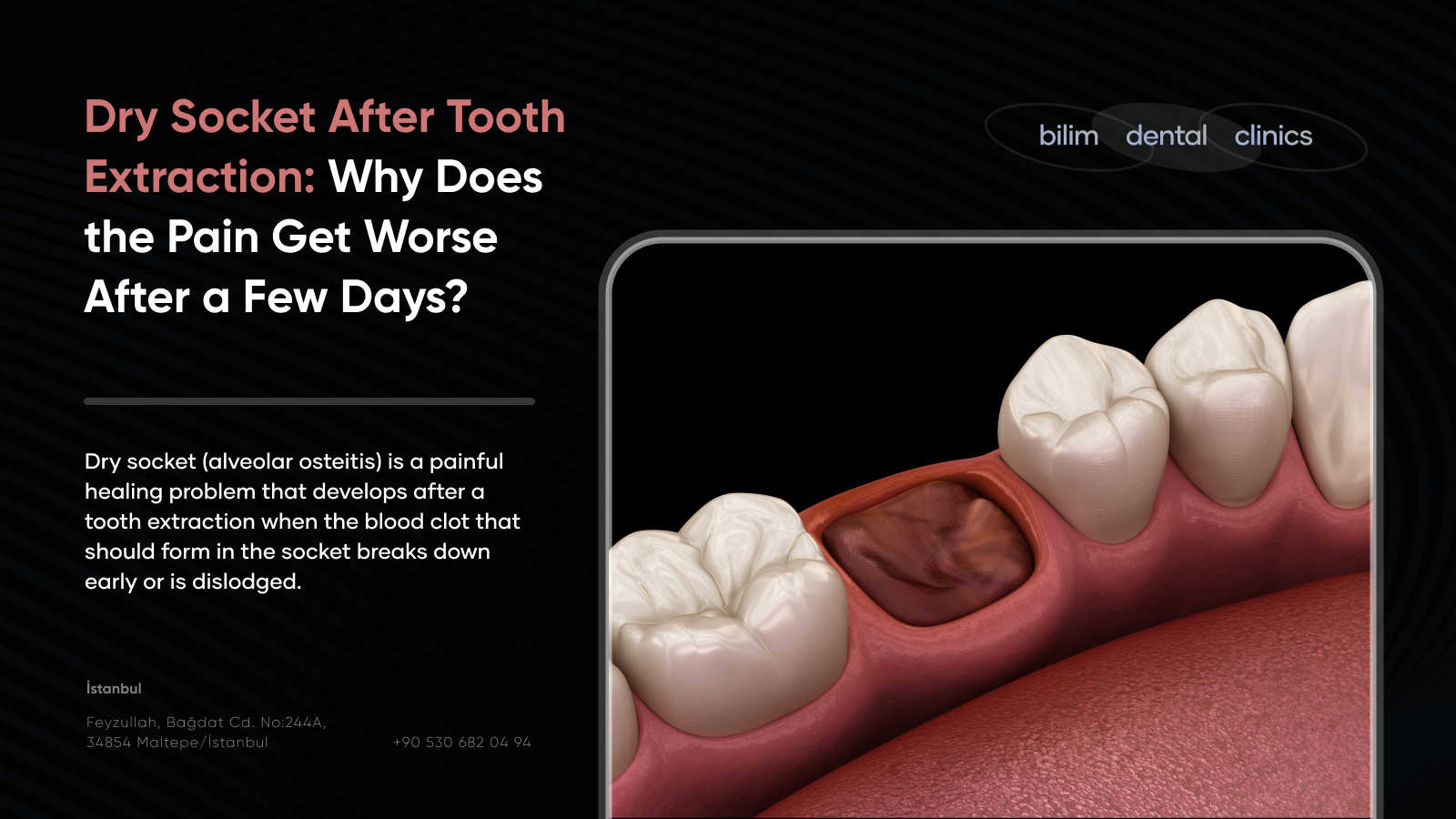
Dry socket (alveolar osteitis) is a painful healing problem that develops after a tooth extraction when the blood clot that should form in the socket breaks down early or is dislodged. The clot acts as a natural cover protecting the bone and nerve endings beneath it. Once that cover is lost, the bone is exposed …
Dry socket (alveolar osteitis) is a painful healing problem that develops after a tooth extraction when the blood clot that should form in the socket breaks down early or is dislodged. The clot acts as a natural cover protecting the bone and nerve endings beneath it. Once that cover is lost, the bone is exposed and severe pain begins.
The most telling feature of dry socket is its timing. On the first day, pain eases as expected — then, a few days later, it suddenly gets worse. Patients often describe it as “it was getting better, then it suddenly turned bad.”
In this article, the dentists at Bilim Dental Clinic in Maltepe, Istanbul explain why dry socket happens, how to tell it apart from normal post-extraction pain, who is more at risk, how it is treated, and what you can do to prevent it.
Why Does Dry Socket Happen?
After a tooth is removed, the socket fills with blood and a clot forms. Healing builds on this clot: over time it is replaced by connective tissue and then new bone.
In a dry socket, the clot dissolves or comes away before healing is complete. The exact mechanism is still debated, but the most widely accepted explanation is that enzymes and bacteria in the area break the clot down too quickly. Mechanical effects such as vigorous rinsing or sucking may also play a part.
Normal Extraction Pain or Dry Socket?
Some pain and tenderness after an extraction is normal. Normal pain is usually worst in the first 24–48 hours and eases a little each day. Dry socket follows a different pattern.
| Feature | Normal Healing | Dry Socket |
|---|---|---|
| Pain pattern | Worst on day one, then steadily eases | Eases at first, then clearly worsens 1–3 days later |
| Pain severity | Controlled with painkillers | Severe, throbbing, responds poorly to painkillers |
| Spread of pain | At the extraction site | May radiate to the ear, temple, or neck |
| The socket | Filled with a dark red clot | Looks empty; greyish-white bone may be visible |
| Taste and smell | No notable change | Bad taste and bad breath are common |
High fever, marked facial swelling, or pus are not typical of dry socket. If you have these, there may be a different problem such as an infection, and you should see your dentist without delay.
How Common Is It?
In the literature, dry socket is reported after roughly 1–5% of routine extractions. The rate is considerably higher after surgical removal of lower wisdom teeth. Symptoms usually start 1–3 days after the extraction, so an extraction that goes smoothly for the first couple of days does not mean the risk has passed.
Who Is More at Risk?
Dry socket has several risk factors. The most commonly reported are:
Difficult or traumatic extraction: the harder and longer the extraction, the higher the risk. That is why it is more common after removal of impacted wisdom teeth.
Smoking: systematic reviews show a clearly increased risk of dry socket in smokers. Both nicotine’s effect on blood vessels and the sucking action of smoking work against the clot. We cover smoking’s wider effects in our article on smoking and teeth.
Existing infection in the area: inflammation or gum disease around the tooth before extraction increases the risk.
Poor oral hygiene: a high bacterial load may speed up breakdown of the clot.
A previous dry socket: people who have had dry socket before are more likely to have it again.
Some hormonal factors: some studies have reported a higher risk in women taking the contraceptive pill, though findings are not consistent.
How Is Dry Socket Treated?
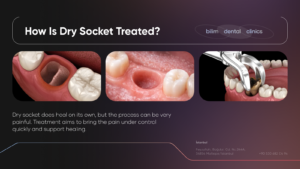
Dry socket does heal on its own, but the process can be very painful. Treatment aims to bring the pain under control quickly and support healing.
1. Cleaning the socket: the dentist gently rinses the socket and removes any trapped food debris.
2. Medicated dressing: a special dressing that soothes pain and protects the area is placed in the socket. Most patients feel clear relief soon afterwards.
3. Pain control: suitable painkillers are recommended.
4. Follow-up visits: the dressing may be changed a few times until the pain settles.
Because dry socket is not an infection, antibiotics are not needed in most cases and are prescribed only if your dentist considers them necessary. With treatment, pain usually eases considerably within a few days.
How Can Dry Socket Be Prevented?
Following your aftercare instructions is the most effective way to reduce the risk:
- Stop smoking, or at least delay it: not smoking in the days after extraction is one of the most important precautions.
- No vigorous rinsing for the first 24 hours: avoid swishing hard so the clot stays in place.
- Don’t use a straw and avoid spitting: sucking and spitting can dislodge the clot.
- Keep up oral hygiene: keep brushing your other teeth and clean the extraction area gently as your dentist shows you.
- Use any recommended rinses: after the first day, your dentist may suggest warm salt water or an antiseptic mouthwash.
- Eat soft foods: avoid chewing on the extraction side for the first few days.
Telling your dentist before the extraction about your medications, whether you smoke, and whether you have had dry socket before helps them take the right precautions.
When Should You Contact Your Dentist?
Contact the dentist who did the extraction without delay if:
- Pain increases rather than decreases 1–3 days after the extraction
- You have throbbing pain radiating to the ear that painkillers don’t control
- The socket looks empty, or you notice a bad taste or smell
- You develop a fever, increasing facial swelling, or pus
Frequently Asked Questions
How long does dry socket last?
Untreated, the pain can last more than a week. With a dressing, it usually eases considerably within a few days.
Will dry socket go away on its own?
Yes, it eventually heals. But untreated it can be very painful, so seeing a dentist is recommended.
Is dry socket dangerous?
It is usually not a serious complication, but it is very painful. Fever and swelling call for assessment for a different problem.
When can I smoke after an extraction?
Not smoking at all is best. If you do smoke, waiting for the period your dentist advises lowers the risk of dry socket.
Does every extraction lead to dry socket?
No. It occurs after only a small proportion of routine extractions. The risk is higher with difficult lower wisdom tooth extractions.
Do I need antibiotics for dry socket?
Usually not. The main treatment is cleaning the socket and placing a medicated dressing.
Post-Extraction Care at Bilim Dental Clinic in Maltepe

Dry socket is very painful, but its treatment is simple and effective. The key is not to dismiss worsening pain as “normal” and wait it out, but to see your dentist promptly. In this article we answered the most common questions: why dry socket happens, how it differs from normal pain, the risk factors, and how it is treated and prevented. For extractions involving the jaw, see our oral and maxillofacial surgery page.
At our clinic, we provide services in all areas of oral and dental health — from aesthetic dentistry and implant treatments to orthodontics and prosthetic applications — using modern technology and evidence-based, scientific approaches. Our experienced team of dentists creates a personalized treatment plan for every patient, aiming to build healthy, natural, and aesthetic smiles.
The dentists who will accompany you throughout this process:
- Dt. Ali Enes Öztürk
- Dt. Salman Taştan
- Dt. Hüseyin Kaya
- Uzm. Dt. Burak Güleç (Orthodontics Specialist)
- Dt. Cem Karaman
- Dt. Ayşe Sizer Çakar
- Dt. Zeynep Ece Okur (Pediatric Dentist)
For pain after an extraction or a follow-up check, contact us or visit us — we invite you to visit Bilim Dental Clinic on Bağdat Caddesi in Maltepe, Istanbul. You can follow our latest updates on our Instagram account.
WhatsApp: +90 538 977 89 01