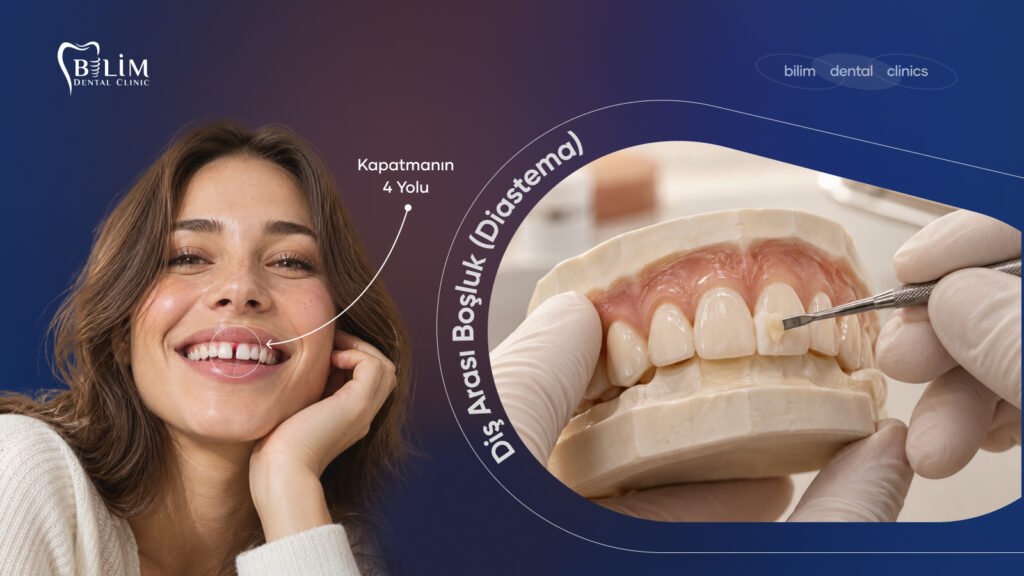
A diastema is a gap between two teeth, most often between the two upper front teeth. For some people it is part of their character, even a feature they love; for many others it is the detail they like least about their smile. A diastema is not always just cosmetic, though for most people it …
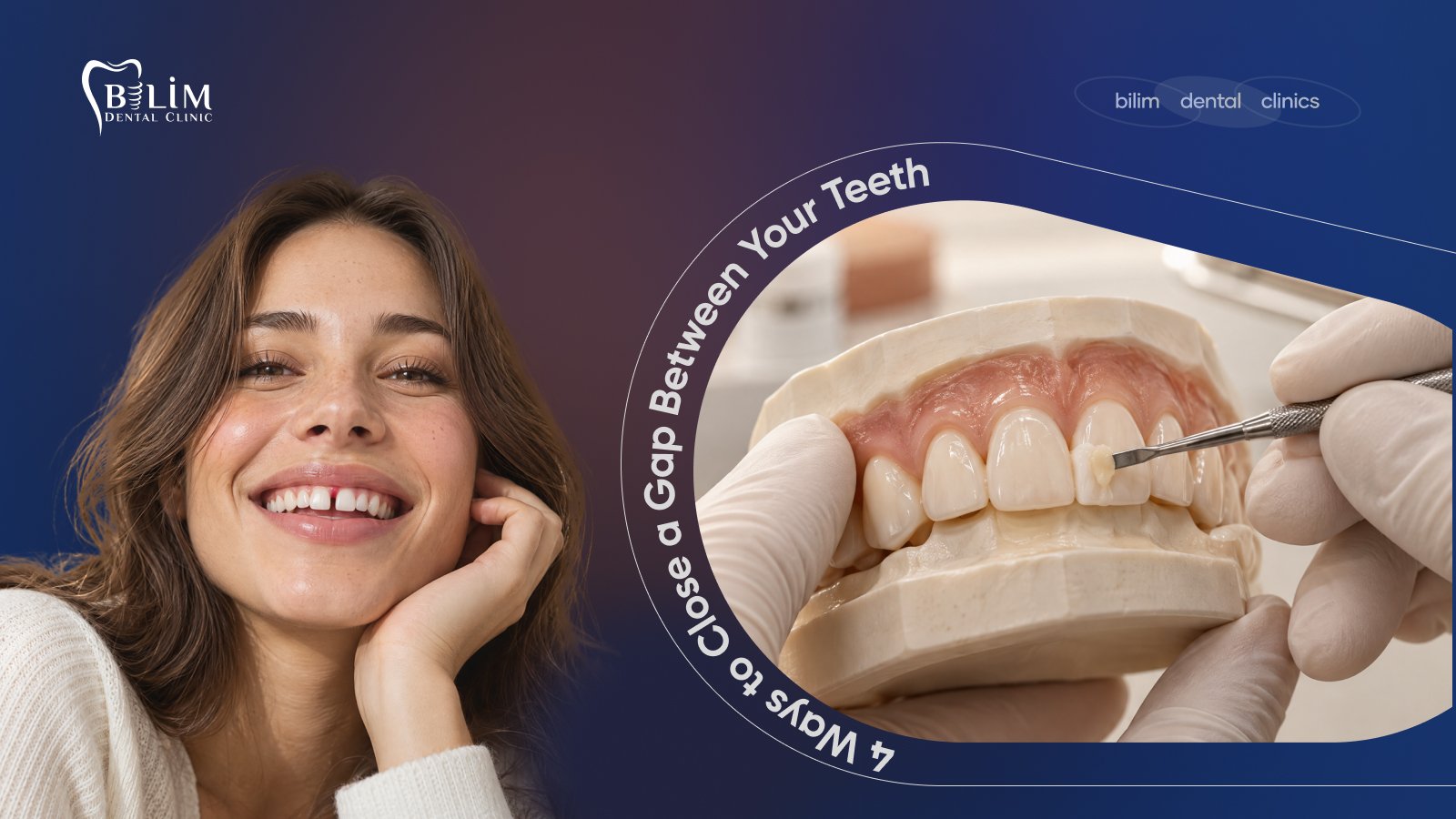
A diastema is a gap between two teeth, most often between the two upper front teeth. For some people it is part of their character, even a feature they love; for many others it is the detail they like least about their smile.
A diastema is not always just cosmetic, though for most people it is. Some gaps point to a missing tooth, gum disease, or teeth drifting over time. That is why it is important to understand the cause before choosing how to close it — otherwise the gap may simply reopen.
In this article, the dentists at Bilim Dental Clinic in Maltepe, Istanbul explain the causes of a diastema, the four main ways to close it, the pros and limits of each, and which suits which situation.
What Causes a Diastema?
Mismatch between tooth and jaw size: if the teeth are small relative to the jawbone, spaces remain between them. This is the most common cause and often runs in families.
A thick or low lip frenum: if the tissue connecting the upper lip to the gum extends down between the front teeth, it can keep them apart.
Small or missing lateral incisors: when the lateral incisors are missing or peg-shaped, gaps appear at the front.
Gum disease: in advanced gum disease the bone supporting the teeth is lost, and teeth can fan forward, opening gaps. Gaps that appear or widen in adulthood should always be checked for this reason.
Habits: thumb sucking, tongue thrusting, and lip biting can push the front teeth forward.
Tooth loss: after an extraction, neighbouring teeth drift into the space and other gaps can open.
Childhood: gaps between the front teeth are normal in the baby and mixed dentition years (the so-called “ugly duckling stage”) and often close as the permanent canines erupt.
When Should You Be Concerned?
Most cases of diastema are harmless. An examination is recommended for:
- A gap that appears or widens in adulthood
- A gap with bleeding gums, gum recession, or loose teeth
- Food trapping and gum inflammation
- Whistling or a lisp when speaking
- A gap in a child that does not close after the permanent canines arrive
A new gap in an adult should first be assessed within periodontal treatments, because cosmetic closure without healthy gums will not last.
Four Ways to Close a Diastema

1. Bonding
Tooth-coloured composite is added in layers to the sides of the teeth either side of the gap and shaped, widening the teeth slightly to close it.
Pros: usually done in one visit, needs little or no removal of tooth structure, reversible, and less expensive than other cosmetic options.
Limits: can stain over time and chip at the edges; periodic polishing or renewal may be needed. With large gaps, teeth can look disproportionately wide.
It is the most common choice for small to medium gaps. Read more about dental bonding.
2. Porcelain Veneers
Thin porcelain shells bonded to the front of the teeth reshape their form, length, and colour together.
Pros: stain-resistant, very natural-looking, and long-lasting. Gaps, colour, shape, and minor crowding can be corrected at once.
Limits: require removing a small amount of enamel and are not reversible; more visits and higher cost than bonding.
A good option if you are also unhappy with the colour and shape of your teeth. See our guide to porcelain veneers.
3. Clear Aligners
Custom clear aligners move the teeth gradually to close the gap.
Pros: the teeth themselves are untouched, aligners are nearly invisible and removable for eating and brushing, and multiple gaps and mild crowding can be treated together.
Limits: must be worn 20–22 hours a day, treatment takes months, and retention afterwards is essential.
4. Braces
Brackets and wires move the teeth in a controlled way to close the space.
Pros: the most effective option for complex cases, large gaps, bite problems, and where root position must also be corrected; less dependent on patient compliance than aligners.
Limits: more visible, harder to clean around, and usually longer treatment.
With aligners and braces alike, lifelong retention matters — otherwise the gap can reopen. Our orthodontic treatmentpage explains the options.
Comparing the Four Methods
| Feature | Bonding | Veneers | Clear Aligners | Braces |
|---|---|---|---|---|
| Time | Usually one visit | 2–3 visits | Several months | Months to a year+ |
| Enamel removal | None or minimal | Small amount | None | None |
| Reversible? | Yes | No | Yes | Yes |
| Staining | Possible over time | No | Natural tooth colour | Natural tooth colour |
| Best gap size | Small–medium | Small–medium, with colour/shape concerns | Small–medium, multiple gaps | Any size, complex cases |
| Retention needed | No | No | Lifelong | Lifelong |
| Cost | Low | High | Medium–high | Medium |
Methods are often combined. Teeth may first be moved into the right position orthodontically, with any small remaining spaces finished with bonding. This gives correct positioning and attractive proportions.
Which Option Suits You? Questions to Ask

Before choosing how to close a diastema, these questions help:
Is there one gap or several? A single small gap is often handled well with bonding; several gaps in different areas usually look more natural closed orthodontically.
Are you happy with the colour and shape of your teeth? If so, bonding or orthodontics, which don’t change tooth structure, may suit you. If you’d also like a new colour and shape, veneers are an option.
Is your bite healthy? If the front teeth have fanned forward or there is a bite problem, simply filling the gap won’t solve it; orthodontic treatment is needed.
How much time do you have? Before a wedding or special event, bonding is the fastest option. For a more natural, lasting solution, allow for orthodontic treatment taking months.
How do you feel about long-term upkeep? Bonding needs occasional polishing and renewal; orthodontic treatment means a retainer for life.
Combined with an examination and, if needed, an x-ray, these answers point to the right plan. Digital smile design can sometimes show the result before treatment begins.
Diastema and Gum Health
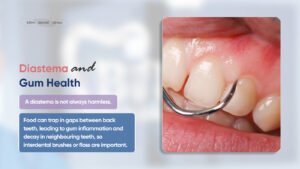
A diastema is not always harmless. Food can trap in gaps between back teeth, leading to gum inflammation and decay in neighbouring teeth, so interdental brushes or floss are important.
If a gap between the front teeth slowly widens in adulthood, it can be a sign that supporting bone is being lost. Cosmetic closure without treating gum disease breaks down as the underlying problem progresses, so the first step in treating a diastema is always to assess gum health.
Once gum disease is treated, gaps can be closed orthodontically, but retention and gum monitoring are especially important for these patients.
Is a Frenectomy Needed?
If a thick, low lip frenum is the cause, it can push the front teeth apart again after closure. A minor procedure to release it (frenectomy) may be recommended.
Timing matters. In children it is usually not done before the permanent canines erupt, because the gap may close on its own. It is more often done during orthodontic treatment or after the gap has closed. It is a quick procedure under local anaesthetic and usually heals fast; such minor procedures fall under oral and maxillofacial surgery.
Diastema in Children
Gaps between baby teeth are actually a good sign: permanent teeth are larger, and the gaps make room for them. Children whose baby teeth are tightly packed are more likely to have crowded permanent teeth.
Between about seven and ten, a gap between the upper front teeth and a fan-like spread is common and usually temporary; the front teeth close in as the canines erupt. Cosmetic closure is not done at this age, but a large gap or a suspected extra tooth is checked with an x-ray.
Keeping the Gap Closed
- Wear your retainer as instructed after orthodontic treatment
- Stop habits such as tongue thrusting and nail biting
- Attend regular check-ups and cleanings to protect your gums
- Avoid biting hard objects with bonded teeth
- Wear a night guard if you clench or grind — see our guide to tooth grinding and clenching
Frequently Asked Questions
Does a diastema close on its own?
In children it often closes as the permanent canines erupt. In adults it does not close by itself and may even widen.
What is the fastest option?
Bonding can close a suitable gap in a single visit.
Bonding or veneers — which is better?
If the gap is the only concern, bonding is usually enough. If you also want to change colour and shape, veneers may suit you better.
Can a gap affect speech?
Large gaps can affect some sounds, causing a whistle or lisp.
Can a gap be a sign of gum disease?
A new or widening gap in an adult can be; gums should be examined first.
Can a closed gap reopen?
After orthodontic closure, it can if retention is neglected. Bonding and veneers don’t move teeth, so if the underlying cause continues, new gaps can appear.
How long do aligners take to close a gap?
It depends on the size; small gaps may close in a few months.
How long does bonding last?
Several years or longer depending on habits and care, with occasional polishing or renewal.
Is a frenectomy painful?
It is done under local anaesthetic; there may be mild tenderness for a few days.
How is the cost determined?
It depends on the method, the number of gaps, and the scope of treatment. You will receive a personalised plan after examination.
Diastema Treatment at Bilim Dental Clinic in Maltepe

There is no single right way to close a diastema; the best option depends on the cause, the size, and what you want from your smile. In this article we answered the questions we are asked most: causes, bonding, veneers, aligners, braces, frenectomy, and keeping the result. For overall cosmetic planning, see our smile design page.
At our clinic, we provide services in all areas of oral and dental health — from aesthetic dentistry and implant treatments to orthodontics and prosthetic applications — using modern technology and evidence-based, scientific approaches. Our experienced team of dentists creates a personalized treatment plan for every patient, aiming to build healthy, natural, and aesthetic smiles.
The dentists who will accompany you throughout this process:
- Dt. Ali Enes Öztürk
- Dt. Salman Taştan
- Dt. Hüseyin Kaya
- Uzm. Dt. Burak Güleç (Orthodontics Specialist)
- Dt. Cem Karaman
- Dt. Ayşe Sizer Çakar
- Dt. Zeynep Ece Okur (Pediatric Dentist)
For a diastema assessment, we invite you to visit Bilim Dental Clinic on Bağdat Caddesi in Maltepe, Istanbul. You can follow our latest updates on our Instagram account.
WhatsApp: +90 538 977 89 01