Retained baby teeth are one of the most common worries parents bring to a children's dentist. Your child's friends all have wobbly teeth — why hasn't theirs moved? Or the opposite: a new tooth has appeared behind the lower front teeth, but the baby tooth in front of it is not budging. This double-row look, …
Retained baby teeth are one of the most common worries parents bring to a children’s dentist. Your child’s friends all have wobbly teeth — why hasn’t theirs moved? Or the opposite: a new tooth has appeared behind the lower front teeth, but the baby tooth in front of it is not budging. This double-row look, often called “shark teeth”, is one of the situations parents ask us about most.
The good news is that most of these situations are part of normal development and resolve on their own. Sometimes, however, a delay is a sign of something that needs attention — a permanent tooth that is missing, stuck in the bone, or heading in the wrong direction.
In this article, the dentists at Bilim Dental Clinic in Maltepe, Istanbul — including our paediatric dentist — explain the normal timing of tooth change, the possible reasons for delay, what to do about shark teeth, and which signs mean it is time to see a dentist.
When Do Baby Teeth Fall Out? The Normal Timeline
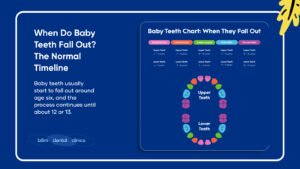
Baby teeth usually start to fall out around age six, and the process continues until about 12 or 13. Timing varies between children; starting a year to eighteen months early or late is often normal. Girls tend to start slightly earlier than boys.
The approximate timeline for permanent teeth is:
| Permanent Tooth | Approximate Age | Note |
|---|---|---|
| Lower central incisors | 6–7 years | Usually the first to change |
| First permanent molars | 6–7 years | Erupt at the back, not in place of a baby tooth |
| Upper central incisors | 7–8 years | |
| Lateral incisors | 7–9 years | |
| Lower canines | 9–10 years | |
| Premolars | 10–12 years | Replace the baby molars |
| Upper canines | 11–12 years | Among the teeth most likely to become impacted |
| Second permanent molars | 12–13 years | |
| Wisdom teeth | 17–21 years | Never form in some people |
One detail matters here. The first permanent molars that appear at the back around age six do not replace anything, so parents often assume they are baby teeth. They are permanent and must last a lifetime, which makes protecting them from decay especially important.
As a general guide, a gap of more than a year between expected teeth, or one side changing while the matching tooth on the other side stays put for more than six months, is worth having checked.
Shark Teeth and Retained Baby Teeth: The Adult Tooth Coming in Behind
Shark teeth are the most familiar form of retained baby teeth. It is very common for a lower permanent front tooth to come through behind the baby tooth, on the tongue side, creating what looks like two rows of teeth.
The reason is anatomical. The lower permanent incisors develop slightly behind the baby teeth. Normally, the erupting tooth dissolves the root of the one in front, which then loosens and falls out. Sometimes, though, the new tooth finds a path behind without fully dissolving that root, and the old tooth stays in place.
What should you do? In most cases of retained baby teeth at the front, the baby tooth loosens and falls out within a few weeks. Encouraging your child to wiggle it with their tongue helps, and the tongue also gradually pushes the new tooth forward.
See a dentist if:
- The permanent tooth is fully visible but the baby tooth is not loose at all
- The baby tooth has not started to loosen within a few weeks
- The gum is red, swollen, or painful
- Your child is struggling to eat
In these cases the dentist can remove the baby tooth with a quick, simple procedure. Afterwards, the tongue usually guides the permanent tooth into its proper position.
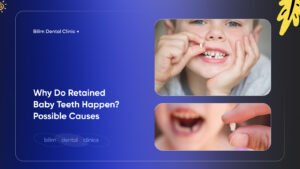
Why Do Retained Baby Teeth Happen? Possible Causes
1. No Permanent Tooth Underneath
One of the most common reasons for retained baby teeth is that there is no permanent tooth beneath to push them out. Congenitally missing teeth (agenesis) most often affect the lateral incisors and premolars and can run in families.
In this situation the baby tooth may stay for many years, sometimes into adulthood. Planning depends on the condition of that tooth, the strength of its root, and the child’s overall alignment. In some cases it is kept; in others the space is planned for later with orthodontics or implant treatment. Implants are not placed until growth is complete.
2. An Impacted or Misdirected Permanent Tooth
Impaction is another cause of retained baby teeth. Sometimes the permanent tooth cannot find its path, tilts sideways, or stays buried in the bone. This happens most often with the upper canines. Because an impacted tooth can damage the roots of neighbouring teeth, early diagnosis matters.
3. Ankylosis (Fusion to the Bone)
Some retained baby teeth, particularly baby molars, have fused to the bone. Over time they appear to “sink” below their neighbours. They can block the permanent tooth beneath and cause adjacent teeth to tip into the space.
4. Crowding and Extra Teeth
A narrow jaw or an extra (supernumerary) tooth can block the way. Extra teeth are most common in the upper front region and can delay the permanent front teeth there.
5. Trauma and Infection
A knock to a young tooth, or deep decay and an abscess, can affect the position and development of the permanent tooth forming underneath. If your child has had an injury, our guide to dental trauma in the first 60 minutes explains what to do.
6. General Health
Rarely, a general delay in tooth eruption is linked to a hormonal, genetic, or systemic condition. If several areas are clearly delayed, your dentist may suggest an assessment together with your paediatrician.
What If a Baby Tooth Is Lost Too Early?
The opposite can also happen: a baby tooth is lost long before its time because of decay, infection, or injury, and that brings its own problems.
Baby teeth act as space holders for the permanent teeth. When a baby molar is lost early, the neighbouring teeth gradually drift into the gap and the permanent tooth may have nowhere to go — leading to crowding, impaction, and later orthodontic treatment.
That is why the dentist may recommend a space maintainer after early loss: a simple appliance that keeps the gap open until the permanent tooth arrives.
How a Dentist Assesses Retained Baby Teeth
When retained baby teeth are suspected, the dentist first examines the mouth: which teeth have changed, which are loose, whether both sides match, and where the permanent teeth are positioned.
A panoramic x-ray may be taken. It shows whether a permanent tooth is present, its stage of development, its position, and its direction of eruption. Missing, impacted, or extra teeth can only be confirmed this way.
Usually one of these options follows:
- Watchful waiting: if the permanent tooth is in a normal position and progressing
- Removing the baby tooth: to clear the way for the permanent tooth
- A space maintainer: to hold space after early loss
- Orthodontic guidance: for impacted teeth, crowding, or missing teeth
- Surgery: to remove an extra tooth or uncover an impacted one
Why It Matters for Orthodontics
Retained baby teeth matter for orthodontics because tooth change happens during the most active period of jaw growth, so problems spotted now can often be solved with simple steps. For example, removing a baby canine at the right time can allow an upper permanent canine that is heading towards impaction to find the right path on its own.
International orthodontic organisations recommend a first orthodontic assessment for every child around age seven. That does not always mean treatment — for most children the answer is “monitor” — but if a problem exists, it can be addressed at the best moment. See our orthodontic treatment page for more.
Retained Baby Teeth: What Parents Should Avoid
- Trying to pull a baby tooth that isn’t loose. If the root hasn’t dissolved, the tooth can break, leave a fragment behind, and become infected.
- String-and-door methods. They hurt and can create a lasting fear of the dentist.
- Leaving decay untreated because “it will fall out anyway.” A decayed tooth can cause pain, an abscess, and damage to the permanent tooth beneath.
- Comparing with other children and worrying unnecessarily. A year’s difference is often normal.
- Ignoring retained baby teeth for more than a year. Missing or impacted teeth are much easier to manage when found early.
Letting your child gently wiggle a loose tooth with their tongue or a clean finger is fine. Once it is loose enough, it usually comes out on its own with very little bleeding.
After a Baby Tooth Falls Out
There may be a little bleeding. Having your child bite on clean gauze or cotton for a few minutes stops it. Avoiding very hot and hard food for a few hours is enough.
The gum may be slightly tender as new permanent teeth come through. Their enamel is not yet fully mature and is more prone to decay, so regular brushing, fluoride toothpaste and, where appropriate, fissure sealants matter during this period.
New permanent front teeth often have small ridges along their edges and may look yellower than the baby teeth beside them. This is entirely normal: the ridges wear down over time, and the colour difference reflects the natural structure of permanent teeth.
Oral Care During the Changeover Years
This is one of the hardest periods for oral care. The mouth contains wobbly teeth and teeth that are only half through, and children may avoid brushing those areas in case it hurts. Yet plaque at the gum line around new teeth can cause inflammation and decay.
Use a small, soft-bristled brush, approach loose teeth gently, and keep supervising: most children cannot brush well enough alone until about seven or eight. The deep grooves on the chewing surfaces of new permanent molars are the most decay-prone areas in the first years, so pay them extra attention. Our guide to toothbrush replacement and brushing technique has practical tips.
Diet matters too. Sugary snacks and acidic drinks spread through the day are a serious risk for immature enamel. Make water and milk the main drinks, and keep sweet foods to mealtimes.
Why School-Age Check-Ups Matter
The school years are when tooth change and jaw growth are fastest, so check-ups every six months to a year are recommended. These visits look not only for decay but at the order of tooth change, the position of permanent teeth, the bite, and habits.
Thumb sucking, lip biting, tongue thrusting, and mouth breathing can all affect where permanent teeth end up; caught early, they can often be managed with simple guidance. For children who play sport, protecting new front teeth with a sports mouthguard is worth discussing too.
Regular visits also help children get used to the dental environment. Coming to a familiar dentist without pain or an emergency makes any future treatment much easier.
Frequently Asked Questions
At what age do baby teeth start to fall out?
Usually around six. Starting anywhere between five and seven is considered normal.
The adult tooth is coming in behind — is that normal?
It is very common, especially with the lower front teeth, and the baby tooth usually falls out within a few weeks. If it is not loose at all, see a dentist.
My child is eight and hasn’t lost a tooth — should I worry?
Usually it is within the normal range, but an examination — and an x-ray if needed — to confirm the permanent teeth are there will put your mind at rest.
What happens to retained baby teeth that never fall out?
If there is no permanent tooth beneath, the baby tooth may stay for many years. Your dentist will advise whether to keep it or plan another solution later.
Will the dentist remove a baby tooth that isn’t loose?
If needed, yes — for example, if the permanent tooth has come in behind it or an x-ray shows it is blocking the way.
Does removing a baby tooth hurt?
It is done under local anaesthetic and takes only a few minutes. Paediatric dentists use an approach suited to the child’s age.
Why isn’t the permanent tooth coming through?
It may be missing, impacted, or blocked by crowding or an extra tooth. An x-ray shows the exact cause.
What is a space maintainer?
An appliance that holds the gap left by an early-lost baby tooth until the permanent tooth arrives.
Why do the new teeth look more yellow?
Permanent teeth have a thicker dentine layer, so they naturally look slightly yellower than baby teeth.
Are the ridges on new front teeth normal?
Yes. They are a natural feature of newly erupted incisors and wear smooth over time.
Monitoring Tooth Change at Bilim Dental Clinic in Maltepe

The changeover from baby teeth to permanent teeth lays the foundations for the teeth your child will use for life. In this article we answered the questions parents ask most: the normal timeline, shark teeth, the causes of retained baby teeth, space maintainers, and orthodontic assessment. You can meet our paediatric dentist, Dt. Zeynep Ece Okur, on our team page.
At our clinic, we provide services in all areas of oral and dental health — from aesthetic dentistry and implant treatments to orthodontics, prosthetic applications, and children’s dentistry — using modern technology and evidence-based, scientific approaches. Our experienced team of dentists creates a personalized treatment plan for every patient, aiming to build healthy, natural, and aesthetic smiles.
The dentists who will accompany you throughout this process:
- Dt. Ali Enes Öztürk
- Dt. Salman Taştan
- Dt. Hüseyin Kaya
- Uzm. Dt. Burak Güleç (Orthodontics Specialist)
- Dt. Cem Karaman
- Dt. Ayşe Sizer Çakar
- Dt. Zeynep Ece Okur (Pediatric Dentist)
To have your child’s retained baby teeth or tooth change checked, we invite you to Bilim Dental Clinic on Bağdat Caddesi in Maltepe, Istanbul. You can follow our latest updates on our Instagram account.
WhatsApp: +90 538 977 89 01