Abfraction is the term most often used for the notch or groove that forms where a tooth meets the gum — the "neck" of the tooth. People usually notice it in the mirror, or feel it with their tongue as a small dip at the gum line. Sometimes it causes a sharp twinge when drinking …
Abfraction is the term most often used for the notch or groove that forms where a tooth meets the gum — the “neck” of the tooth. People usually notice it in the mirror, or feel it with their tongue as a small dip at the gum line. Sometimes it causes a sharp twinge when drinking cold water; sometimes it causes nothing at all.
The first question patients ask is almost always the same: “Is it decay?” In most cases, no. These notches are not caused by bacteria but by a combination of brushing habits, biting and clenching forces, and acids. Knowing the difference matters, because treatment and prevention both depend on the cause.
In this article, the dentists at Bilim Dental Clinic in Maltepe, Istanbul explain what causes notches at the gum line, what abfraction means, how it differs from decay, when a filling is needed, and how to stop the wear progressing.
What Is Abfraction?
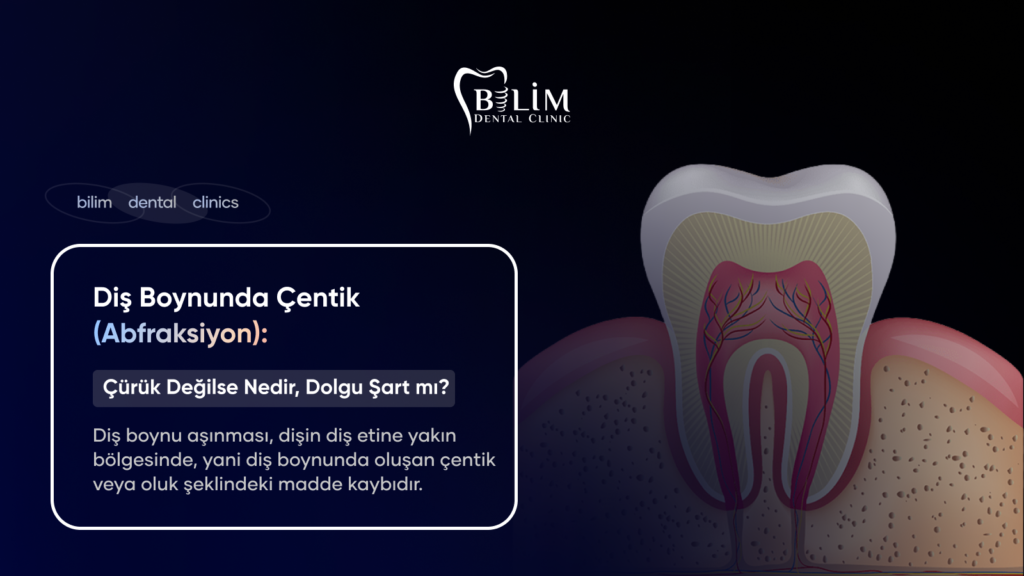
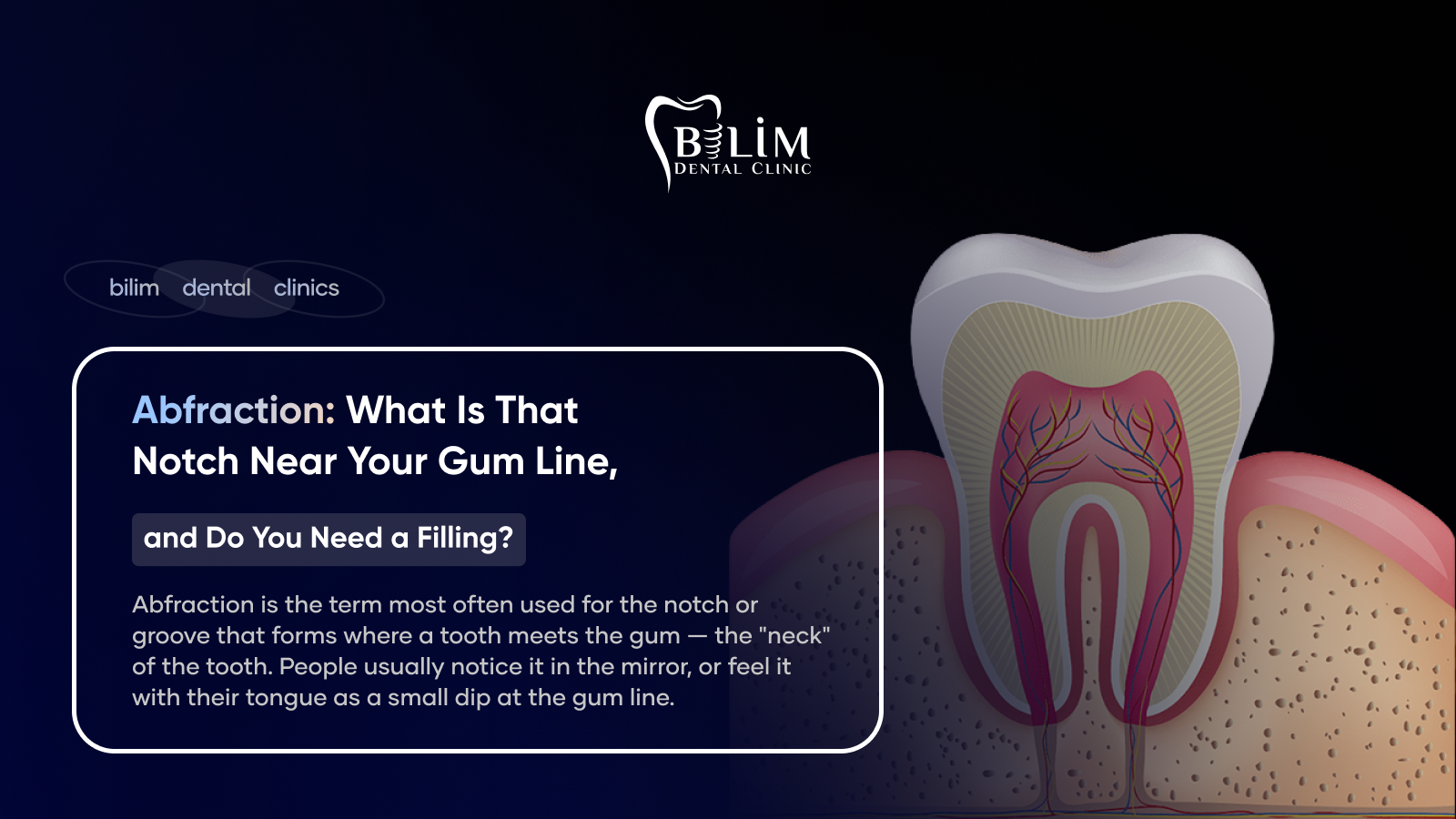
The visible part of the tooth (the crown) is covered by enamel, which thins towards the gum line and is at its thinnest at the neck of the tooth. Here the softer dentine underneath lies very close to the surface; if the gum recedes, the root surface is exposed completely. That makes the neck one of the most sensitive and wear-prone areas in the mouth.
Dentists call these defects non-carious cervical lesions. Three mechanisms are usually described, and in most people they occur together:
Abrasion: mechanical wear, most often from brushing too hard, a horizontal sawing motion, or abrasive toothpaste. It usually produces broad, rounded, shiny notches.
Abfraction: clenching, grinding, and uneven biting forces flex the tooth and create stress at its neck. This stress cracks the enamel at a microscopic level and, over time, can produce deep, sharp-edged, wedge-shaped (V-shaped) notches.
Erosion: acids dissolving the tooth chemically. Acidic drinks, reflux, or frequent vomiting soften enamel, which then wears more easily under brushing and biting forces.
Current thinking is that these lesions usually result from several mechanisms acting together rather than one alone. How much abfraction contributes on its own is still debated, but it is widely accepted that clenching forces speed the process up.
Abfraction or Decay?
This distinction is critical for treatment. The table below gives a general guide; a firm diagnosis needs an examination.
| Feature | Abfraction / Wear | Decay at the Gum Line |
|---|---|---|
| Cause | Brushing, clenching forces, acids | Bacterial plaque and sugar |
| Surface | Hard, smooth, often shiny | Soft, rough, catches a probe |
| Colour | Tooth-coloured or slightly yellow | Brown, black, or chalky white spots |
| Shape | Wedge, groove, or saucer; sharp or rounded edges | Irregular outline |
| Distribution | Often several teeth, especially premolars and canines | Where plaque gathers |
| Progression | Slow, over years | Can be faster |
| Main approach | Correct the cause; fill if needed | Remove decay and fill |
One important detail: a worn notch can collect plaque and decay over time. A lesion that starts as wear can become decay years later, which is why regular check-ups matter.
What Causes Abfraction and Gum-Line Wear?
Hard brushing and poor technique: the most common cause. A hard brush, too much pressure, and side-to-side scrubbing wear the necks of the teeth over the years — which is why right-handed people often have more wear on their left side. Our guide to toothbrush replacement and brushing technique explains how to brush correctly.
Clenching and grinding: unconscious clenching by night or day creates stress at the neck of the teeth. See our guide to tooth grinding and clenching.
Bite problems: uneven contact between the teeth can overload some of them.
Acidic diet and reflux: acidic drinks, citrus, vinegar, and stomach acid soften enamel. Brushing straight after something acidic speeds up wear.
Gum recession: when gums recede, the root surface — which has no enamel — is exposed and wears far more easily. We explain the causes in our article on gum recession treatment.
Age: gum-line wear is more common with age, because it builds up over years.
Signs to Look Out For
- A notch or groove at the gum line you can feel with your tongue
- Brief, sharp sensitivity to cold water, cold air, or sweet food
- A twinge at the gum line when brushing
- Yellowish discolouration at the neck of the tooth (exposed dentine)
- Gum recession and teeth that look longer
- In advanced cases, a weakened tooth with a risk of fracture
Many people have no symptoms at all, and the wear is spotted at a routine check-up.
Does Abfraction Need a Filling?
This is the question we hear most, and the answer is “it depends.” Not every notch needs filling. Your dentist will weigh up the following:
A filling is usually recommended when:
- The notch is deep and threatens the strength of the tooth
- Sensitivity doesn’t settle with other measures
- The notch traps plaque, making cleaning difficult, or decay has started
- The wear is progressing quickly
- It bothers you cosmetically, especially on front teeth
- There is a risk of it reaching the nerve
Monitoring and prevention may be enough when:
- The notch is shallow and causing no symptoms
- Sensitivity is controlled with fluoride and a suitable toothpaste
- Check-ups show it is not progressing
When a filling is placed, tooth-coloured composite filling material is usually used. It protects the neck of the tooth, reduces sensitivity, and improves appearance. One thing to know, however: fillings at the gum line can come out more often than fillings elsewhere, especially if clenching continues. That is less about the quality of the filling than the flexing forces in that area — which is why the cause must be controlled alongside the filling.
Other Treatment Options
Desensitising treatments: fluoride varnish and desensitising agents applied in the clinic seal exposed dentine tubules and reduce sensitivity. Sensitivity toothpaste can support this at home.
Night guard: if you clench or grind, a night guard protects both your teeth and any fillings.
Bite adjustment: contacts that overload certain teeth can sometimes be balanced with small adjustments.
Gum treatment: where gum recession is present, a gum graft can cover the exposed root in suitable patients. Fillings and gum treatment are sometimes planned together; see our periodontal treatments page.
Habit change: whichever treatment is chosen, the wear will continue unless brushing technique and diet are corrected.
7 Ways to Stop Abfraction and Gum-Line Wear Progressing
- Use a soft-bristled brush and don’t press hard; electric brushes with pressure sensors help.
- Avoid horizontal scrubbing; use small circular or sweeping movements from gum to tooth.
- Choose a low-abrasive toothpaste; some “whitening” pastes are more abrasive.
- Wait 30–60 minutes after anything acidic before brushing; rinse with water in the meantime.
- Have acidic drinks with meals rather than sipping them all day.
- Notice clenching; during the day, check that your teeth aren’t touching, and ask your dentist about night-time protection.
- Attend regular check-ups; only comparison over time shows whether wear is progressing.
What Happens If It’s Left Untreated?
Gum-line wear usually progresses slowly, but if neglected it can lead to:
- Increasing sensitivity that affects daily life
- The notch trapping plaque and decaying
- The tooth weakening at the neck and, in advanced cases, fracturing
- The notch approaching the nerve and needing root canal treatment
- A less attractive smile
A process that can be controlled early with simple measures can need more extensive treatment later.
What Happens at the Examination?
The dentist looks at where the notches are, how deep they are, their shape and surface, and whether there is any decay. Gum levels and recession are measured. Your bite, signs of clenching (shiny wear facets, enlarged jaw muscles), and brushing habits are discussed.
Photographs or intraoral scans may be recorded so that later check-ups can show whether the wear is progressing. At Bilim Dental Clinic, we base the treatment decision on the cause as much as on the notch itself.
Frequently Asked Questions
Is a notch at the gum line decay?
Usually not. A hard, smooth notch is generally wear. But it can decay over time, so it should be checked.
Does abfraction heal on its own?
No. Lost tooth structure doesn’t grow back, but progression can be stopped with the right measures.
Does every notch need a filling?
No. Shallow, symptom-free notches that aren’t progressing can be monitored. Deep, sensitive, or progressing notches usually need filling.
Why do gum-line fillings fall out?
Clenching forces and flexing of the tooth in that area make retention harder. A night guard and controlling the cause reduce the risk.
What’s the difference between abfraction and abrasion?
Abrasion is wear from mechanical friction such as brushing; abfraction is loss caused by stress from biting and clenching forces. Most people have both.
Do electric toothbrushes make it worse?
Used correctly, no — pressure-sensor models can help by preventing over-brushing.
Does it cause sensitivity?
Yes. Exposed dentine often makes teeth sensitive to cold and sweet foods.
Can I use whitening toothpaste?
People with wear are generally advised to avoid highly abrasive pastes. Ask your dentist which paste suits you.
How long does a gum-line filling last?
It depends on habits and use. Once the cause is controlled, it can last many years.
How is the cost determined?
It depends on the number of teeth and the treatment needed. You’ll receive a personalised plan after examination.
Abfraction Treatment at Bilim Dental Clinic in Maltepe
A notch at the gum line usually isn’t decay — but it shouldn’t be ignored just because it isn’t. In this article we answered the questions our patients ask most: what abfraction is, how it differs from decay, when a filling is needed, and how to stop the wear.
At our clinic, we provide services in all areas of oral and dental health — from aesthetic dentistry and implant treatments to orthodontics and prosthetic applications — using modern technology and evidence-based, scientific approaches. Our experienced team of dentists creates a personalized treatment plan for every patient, aiming to build healthy, natural, and aesthetic smiles.
The dentists who will accompany you throughout this process:
- Dt. Ali Enes Öztürk
- Dt. Salman Taştan
- Dt. Hüseyin Kaya
- Uzm. Dt. Burak Güleç (Orthodontics Specialist)
- Dt. Cem Karaman
- Dt. Ayşe Sizer Çakar
- Dt. Zeynep Ece Okur (Pediatric Dentist)
To have notches at your gum line assessed, we invite you to visit Bilim Dental Clinic on Bağdat Caddesi in Maltepe, Istanbul. You can follow our latest updates on our Instagram account.
WhatsApp: +90 538 977 89 01