A sports mouthguard is a flexible appliance worn over the teeth to protect them, along with the lips, cheeks, and jaw, from impact during sport. Boxing and American football come to mind first, but tooth injuries are surprisingly common in far more popular sports too — basketball, football, handball, cycling, and skateboarding. We see a …
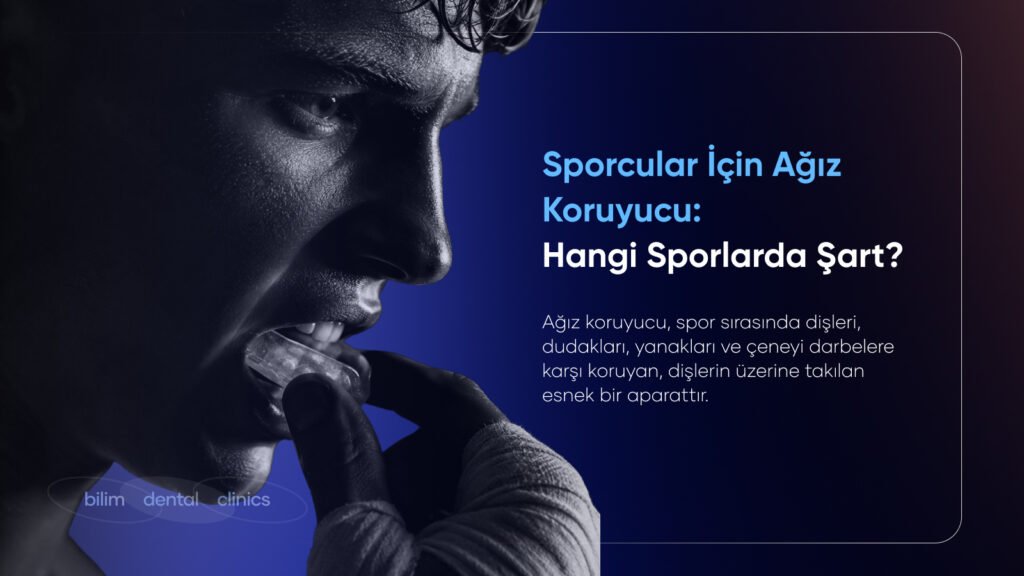
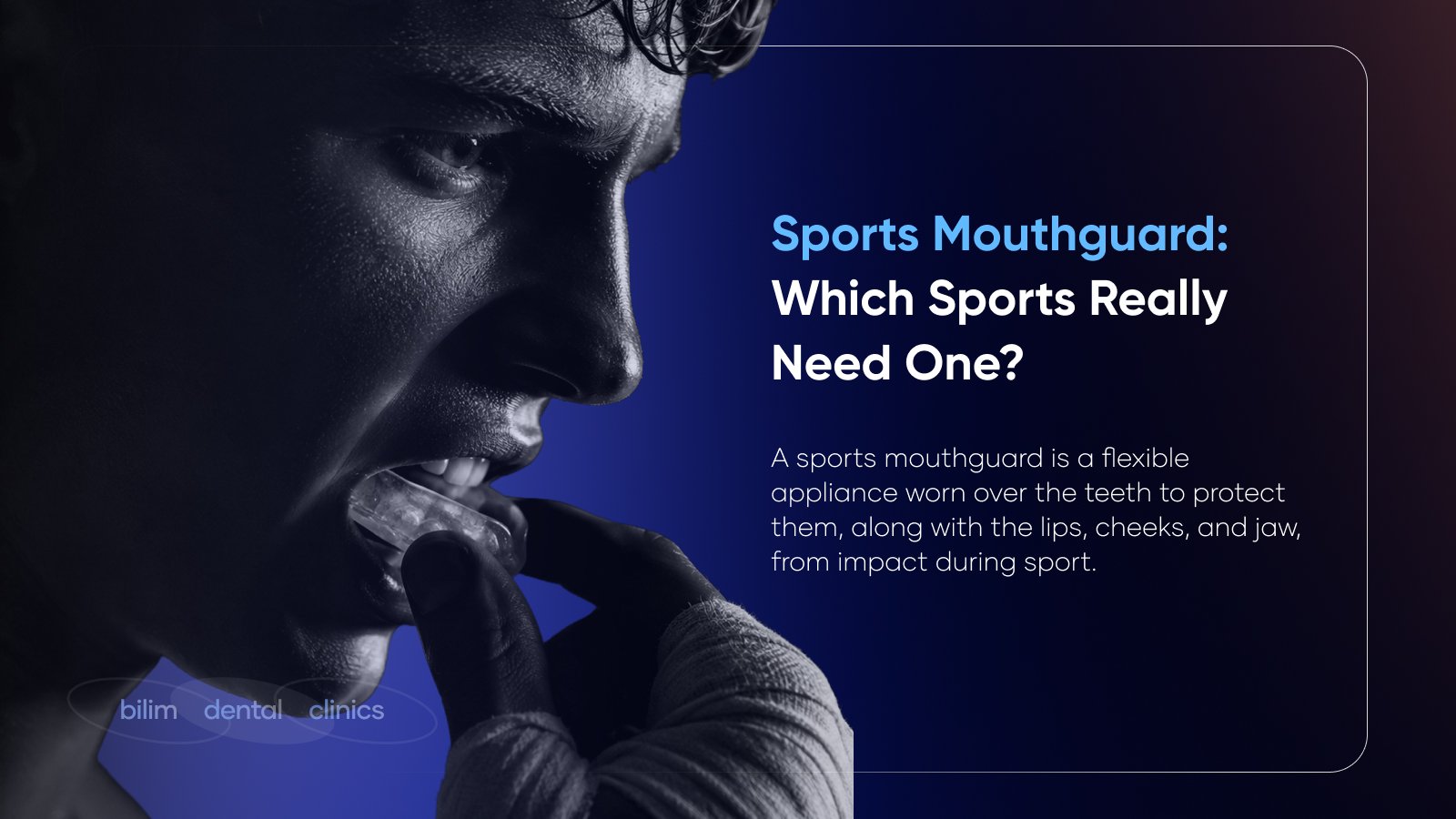
A sports mouthguard is a flexible appliance worn over the teeth to protect them, along with the lips, cheeks, and jaw, from impact during sport. Boxing and American football come to mind first, but tooth injuries are surprisingly common in far more popular sports too — basketball, football, handball, cycling, and skateboarding.
We see a familiar pattern in the clinic: an elbow during a weekend five-a-side match, a collision going for a rebound in basketball, or a fall from a bike. A front tooth broken or knocked out in a split second can mean years of treatment and significant cost. Much of that could have been prevented with a few grams of protection.
In this article, the dentists at Bilim Dental Clinic in Maltepe, Istanbul explain which sports call for a mouthguard, how the different types compare, how to choose the right one, and how to look after it.
What Does a Sports Mouthguard Do?
A blow to the face transfers its energy directly to the teeth and jaw. A sports mouthguard absorbs that energy and spreads it over a wider area, so the force is not concentrated on a single tooth.
Its main benefits are:
- Protecting teeth from fracture and knock-outs, especially the vulnerable upper front teeth
- Reducing lip and cheek injuries by stopping the teeth from cutting soft tissue on impact
- Preventing the upper and lower teeth from slamming together, lowering the risk of cracked molars
- Protecting brackets and tissues in patients wearing braces
- Protecting crowns, bridges, and implants
Mouthguards are often claimed to prevent concussion. The evidence on this is inconsistent: some studies suggest a possible benefit, but it has not been shown that a guard prevents concussion. Its proven role is protecting the teeth, the soft tissues of the mouth, and the jaw. It does not replace a helmet or playing within the rules.
Which Sports Need a Sports Mouthguard?
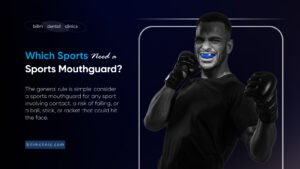
The general rule is simple: consider a sports mouthguard for any sport involving contact, a risk of falling, or a ball, stick, or racket that could hit the face.
| Risk Level | Sports | Recommendation |
|---|---|---|
| Very high | Boxing, kickboxing, Muay Thai, MMA, American football, rugby, ice hockey | Essential; mandatory under the rules in many |
| High | Basketball, football, handball, water polo, field hockey, lacrosse, karate, taekwondo, judo, wrestling | Strongly recommended for matches and training |
| Moderate | Cycling, BMX, mountain biking, skateboarding, skating, skiing, snowboarding, horse riding | Recommended, especially where speed and falls are involved |
| Variable | Volleyball, tennis, squash, baseball, softball, gymnastics, parkour | Depends on playing style and previous injuries |
Recreational football and school sport are where we see many dental injuries, yet guard use there is low. Basketball, although a guard is rarely mandatory, is among the sports with the highest rates of tooth injury.
Wear your sports mouthguard in training as well as matches — a large share of injuries happen in practice.
Types of Sports Mouthguard: Which to Choose?
There are three basic types, and they offer different levels of protection.
1. Stock Mouthguards
Sold ready-made in sports shops and worn straight out of the packet. They are the cheapest option, but because they are not shaped to the teeth they sit loosely, and the wearer has to clench to keep them in place — which makes talking and breathing harder. They offer the least protection.
2. Boil-and-Bite Mouthguards
Softened in hot water, placed in the mouth, and shaped by biting. They fit better than stock guards, but biting too hard while shaping can thin the material in places and reduce protection. Thickness can be uneven, and they may loosen over time.
3. Custom-Made Mouthguards
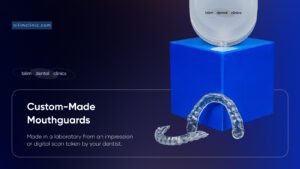
Made in a laboratory from an impression or digital scan taken by your dentist. They fit precisely, their thickness is set according to the protection needed, and they interfere least with talking and breathing. Athletes find them the most comfortable and wear them most consistently — which in practice means the best protection. A guard that stays in the bag protects nothing.
| Feature | Stock | Boil-and-Bite | Custom-Made |
|---|---|---|---|
| Fit | Poor | Moderate | Precise |
| Protection | Low | Moderate | High |
| Speech and breathing | Difficult | Somewhat affected | Least affected |
| Comfort | Low | Moderate | High |
| Thickness control | None | User-dependent, can be uneven | Set by the dentist |
| Cost | Lowest | Low | Higher |
| Best for | Temporary or emergency use | Casual sport, short-term use | Regular athletes, contact sports, braces, restorations |
Any sports mouthguard is better than none. But for regular athletes, contact sports, or anyone with dental restorations, a custom-made guard is the right choice.
What Makes a Good Guard?
Whichever type you choose, it should:
- Stay in place when you talk or open your mouth
- Stay put without you clenching
- Not restrict breathing
- Not dig into the gums or trigger gagging
- Cover all the upper teeth back to the last molars
- Be thick enough at the front
- Be odourless, tasteless, and easy to clean
Guards are usually worn on the upper teeth only. A lower guard may be recommended in specific cases, such as an underbite or certain combat sports.
Children and Teenagers
Tooth injuries peak between the ages of eight and twelve, when children are most active in school and club sport. Children whose upper front teeth stick out are especially vulnerable.
The key issue with a child’s sports mouthguard is growth. As the mouth changes quickly, so does the fit. During the mixed dentition years — when baby teeth are falling out and permanent teeth are arriving — the guard needs checking more often and replacing when necessary.
For prominent front teeth, orthodontic treatment is not only cosmetic; it also reduces the risk of injury.
Athletes Wearing Braces
A sports mouthguard matters even more for athletes in braces. On impact, brackets can be driven into the lips and cheeks causing deep cuts, wires can bend, and brackets can break off.
Two points apply:
- Boil-and-bite guards are generally unsuitable. Teeth are moving during treatment, so a tight guard can interfere with that movement, and the material can stick to brackets when it is shaped.
- An orthodontic guard is used instead — wider and softer, designed to cover the brackets — or another solution your orthodontist recommends.
Patients with clear aligners should remove them for sport, wear a guard, and put the aligners back afterwards. An aligner is not a mouthguard and gives no protection against impact.
How a Custom Guard Is Made
A custom sports mouthguard takes two short appointments. At the first, the dentist examines the mouth and, if there is decay, a broken filling, or gum trouble, plans treatment first. An impression or digital scan of the upper jaw is then taken. You will be asked about your sport, playing position, and previous injuries, because these determine the thickness and outline of the guard.
At the second appointment, the guard is tried in. The dentist checks the fit, the bite, and speech, and makes small adjustments to the edges if needed. Some athletes choose team colours or a name on their guard, which helps children in particular to actually wear it.
Wearing the guard for short periods outside training during the first days helps you get used to it. After a few sessions, most athletes stop noticing it.
The Role of Clubs and Families
Whether a sports mouthguard is worn is often left to the athlete. In youth teams especially, the attitude of the club and family makes the difference. When coaches treat the guard as standard kit — reminding players as they would about shin pads or a helmet — usage rises noticeably.
Keeping a simple card explaining how to store a knocked-out tooth, having cold milk or a tooth-storage solution at the pitch, and suggesting a dental check at the start of the season are small but effective measures. Losing a front tooth can affect an athlete’s health and sporting career; prevention is always easier and cheaper than treatment.
Care and Cleaning
Because a sports mouthguard is used in a warm, moist environment, it is prone to bacterial and fungal growth. A simple routine protects both hygiene and lifespan:
- Rinse in cool or lukewarm water after every use — hot water can warp it
- Clean gently with a soft brush and mild soap — avoid abrasive toothpaste
- Let it dry completely, then store it in a ventilated case
- Never leave it in the sun, in a car, or anywhere hot
- Don’t share it
- Wash the case regularly too
- Bring it to your dental check-ups
When Should It Be Replaced?
A sports mouthguard’s lifespan depends on how often it is used and the type. Replace it if:
- It is torn, has holes, or has sharp edges
- It has thinned noticeably from chewing
- It no longer fits snugly and falls out easily
- Its shape, colour, or smell has changed
- In children, a new tooth has come through or a tooth has been lost
- Dental treatment (fillings, crowns, implants) has changed the shape of the mouth
Regular adult athletes should have their guard checked yearly; growing children more often.
If a Tooth Is Injured During Sport
Despite every precaution, injuries happen. The first minutes matter:
- If there are signs of head injury (loss of consciousness, vomiting, dizziness, headache), go to a hospital emergency department first
- If a permanent tooth is knocked out: hold it by the crown, don’t touch the root, replant it if possible, otherwise store it in cold milk and see a dentist immediately
- If a baby tooth is knocked out: don’t put it back; see a dentist the same day
- If a tooth is broken: keep the fragment in milk or water and see a dentist the same day
We cover these steps in detail in our guide to dental trauma in the first 60 minutes. Out of hours, an on-call dental clinicsaves valuable time.
Clenching and Sport: Two Different Needs
Some athletes, especially in weightlifting and high-exertion sports, clench their teeth without realising. This can wear the teeth and strain the jaw joint.
A sports guard and a night guard for clenching are designed for different jobs. A sports guard is thicker and softer to absorb impact; a night guard may be thinner and harder to protect against clenching forces. If you clench at night, don’t use your sports guard as a night guard — see our guide to tooth grinding and clenching.
Frequently Asked Questions
Is a sports mouthguard only needed for contact sports?
No. Contact sports carry the highest risk, but guards are also recommended for cycling, skateboarding, skating, and skiing, where falls are common.
Can I talk while wearing one?
Short sentences are usually possible with a custom guard. Stock guards make speech much harder.
Is a boil-and-bite guard good enough?
It is better than nothing. For regular contact-sport athletes, a custom guard offers better fit and protection.
Does a mouthguard prevent concussion?
The evidence is inconsistent. Its proven benefit is protecting the teeth, mouth tissues, and jaw.
Can I wear one with braces?
Yes, but use an orthodontic guard. Boil-and-bite guards can stick to brackets and interfere with tooth movement.
How often should my child’s guard be replaced?
More often during growth; replace it when a new tooth comes through or it becomes loose.
Is it worn on the upper or lower teeth?
Usually the upper teeth. A lower guard may be recommended in specific cases.
My guard makes me gag — what should I do?
It may be too long or poorly fitted. With a custom guard, the back edge can be adjusted to suit you.
I have crowns or implants — do I need a guard?
Yes, even more so. Restorations can break on impact and are costly to repair. Our implant treatment patients who play sport get specific advice on protection.
How long does a custom guard take to make?
Usually a few days after the impression or scan. Ask your clinic for exact timing.
Custom Sports Mouthguards at Bilim Dental Clinic in Maltepe

A sports mouthguard is one of the smallest and most important pieces of an athlete’s kit. In this article we answered the questions we are asked most: which sports need one, the different types, braces, children, care, and when to replace it. If cosmetic work has been done on your front teeth, protecting it matters even more — see our smile design page for how we approach those cases.
At our clinic, we provide services in all areas of oral and dental health — from aesthetic dentistry and implant treatments to orthodontics and prosthetic applications — using modern technology and evidence-based, scientific approaches. Our experienced team of dentists creates a personalized treatment plan for every patient, aiming to build healthy, natural, and aesthetic smiles.
The dentists who will accompany you throughout this process:
- Dt. Ali Enes Öztürk
- Dt. Salman Taştan
- Dt. Hüseyin Kaya
- Uzm. Dt. Burak Güleç (Orthodontics Specialist)
- Dt. Cem Karaman
- Dt. Ayşe Sizer Çakar
- Dt. Zeynep Ece Okur (Pediatric Dentist)
For a custom sports mouthguard, we invite you to visit Bilim Dental Clinic on Bağdat Caddesi in Maltepe, Istanbul. You can follow our latest updates on our Instagram account.
WhatsApp: +90 538 977 89 01