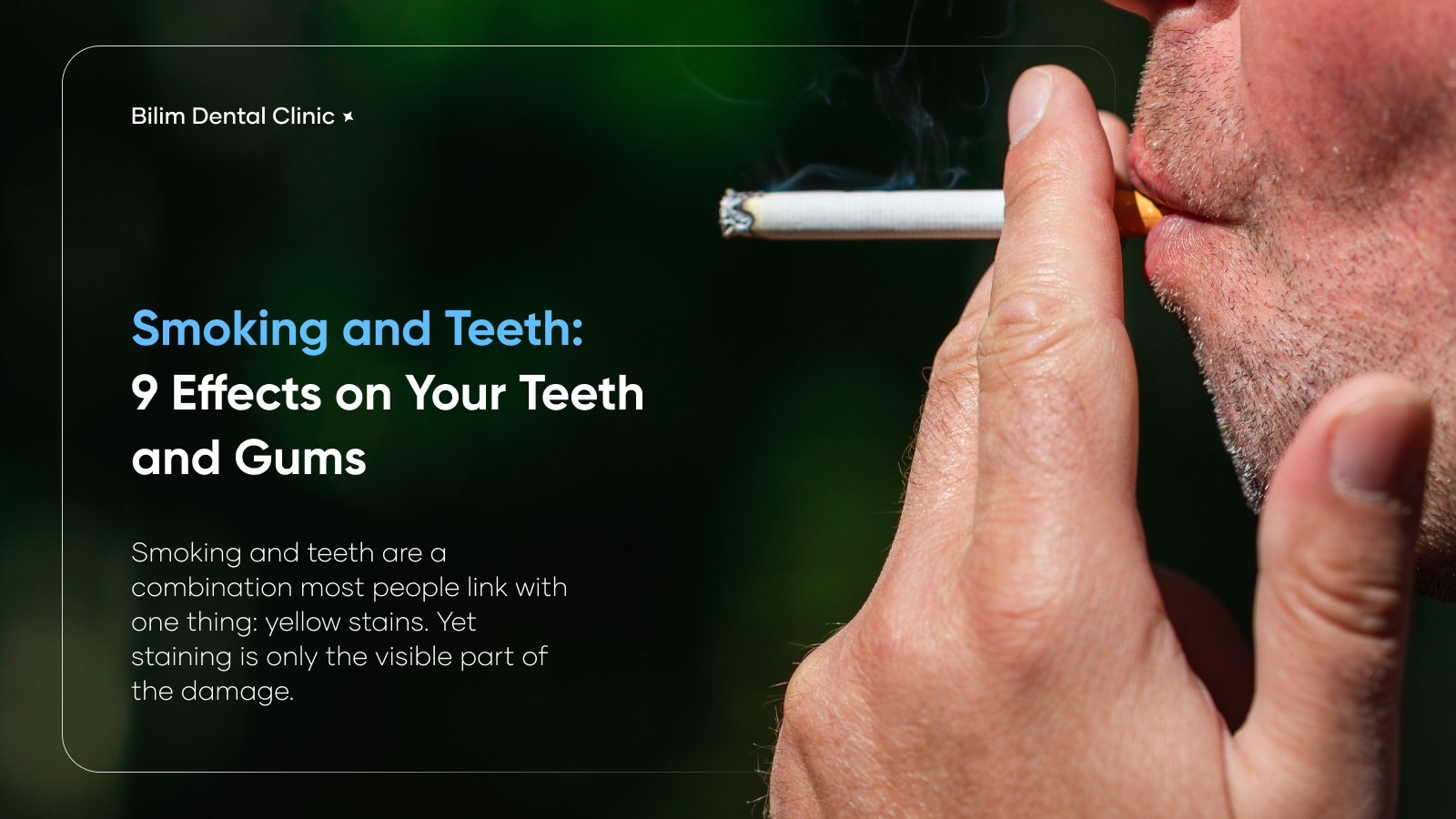
Smoking and teeth are a combination most people link with one thing: yellow stains. Yet staining is only the visible part of the damage. The real problems develop quietly beneath the gum line, in the bone, and in the soft tissues of the mouth — gum disease, tooth loss, wounds that will not heal, failed …
Smoking and teeth are a combination most people link with one thing: yellow stains. Yet staining is only the visible part of the damage. The real problems develop quietly beneath the gum line, in the bone, and in the soft tissues of the mouth — gum disease, tooth loss, wounds that will not heal, failed implants and, most seriously, a higher risk of oral cancer.
There is a situation we see often in smokers at the clinic. The patient believes their gums are healthy because they do not bleed when brushing. Then the examination reveals deep pockets and advanced bone loss. Because smoking hides the most obvious warning sign of gum disease, problems are frequently discovered late.
In this article, the dentists at Bilim Dental Clinic in Maltepe, Istanbul explain nine effects of smoking on your teeth and gums, what hookah and e-cigarettes do, what improves after quitting, and how smokers can protect their oral health.
Smoking and Teeth: How the Damage Begins
Tobacco smoke contains thousands of chemicals. Some come into direct contact with the tissues of the mouth; others reach the whole body through the bloodstream. As the first entry point for smoke, the mouth receives the most intense exposure.
Nicotine narrows blood vessels and reduces blood flow to the gums. With less blood, less oxygen and fewer nutrients reach the tissue, defence cells struggle to get there, and healing slows. Other substances in smoke weaken the immune response and shift the bacterial balance of the mouth towards harmful species.
That is why the link between smoking and teeth goes far beyond the tooth surface — it involves the gums, the bone holding the teeth, the salivary glands, and the soft tissues of the mouth together.
Smoking and Teeth: 9 Harmful Effects
1. Yellowing and Staining
Staining is the most visible link between smoking and teeth. Tar and nicotine settle into the microscopic pores of enamel. Stains that start yellowish turn brown over time and can become almost black with long-term use, concentrating behind the teeth, between them, and along the gum line.
Professional cleaning removes some surface staining, and deeper discolouration can be addressed with tooth whitening— but while smoking continues, the colour soon returns.
2. Bad Breath
In smokers, bad breath has two sources: the smoke itself and the environment smoking creates in the mouth. Reduced saliva, more bacterial build-up, and gum disease produce a persistent odour that gum and mouth sprays can only mask briefly.
3. Higher Risk of Gum Disease
Of all the links between smoking and teeth, gum disease is the most important: smoking is the strongest modifiable risk factor for periodontitis. Smokers develop it considerably more often than non-smokers, at a younger age, and it progresses faster. The risk rises with the number of cigarettes and the years of smoking.
In gum disease, bacteria gradually destroy the gum and bone around each tooth. It is painless at first but, untreated, leads to loose teeth and tooth loss. Our periodontal treatments page explains the options.
4. Hidden Bleeding: Silent Progression
When it comes to smoking and teeth, this is one of the most deceptive effects. Normally the first sign of gum inflammation is bleeding when brushing. Because nicotine constricts blood vessels, inflamed gums in smokers bleed less and look paler. While the patient concludes their gums are fine, the disease continues underneath.
Interestingly, some people who quit notice their gums bleed more in the first weeks. This is not deterioration — it is blood flow returning and hidden inflammation becoming visible.
5. Gum Recession and Tooth Loss
Advancing gum disease and reduced blood flow cause the gums to recede. Root surfaces are exposed, teeth look longer, and sensitivity begins. As bone loss progresses, teeth loosen and may eventually be lost. We discuss the other causes in our article on gum recession treatment.
6. Delayed Healing and Dry Socket
Less blood flow means every wound in the mouth heals more slowly. The best-known example is dry socket after an extraction: the blood clot that should fill the socket breaks down early, the bone is exposed, and severe pain follows. Smoking is one of the most important risk factors for dry socket — both its chemicals and the sucking motion can dislodge the clot.
That is why a break from smoking is strongly recommended before and after extractions or oral surgery. Follow your dentist’s advice on how long.
7. Implant Failure
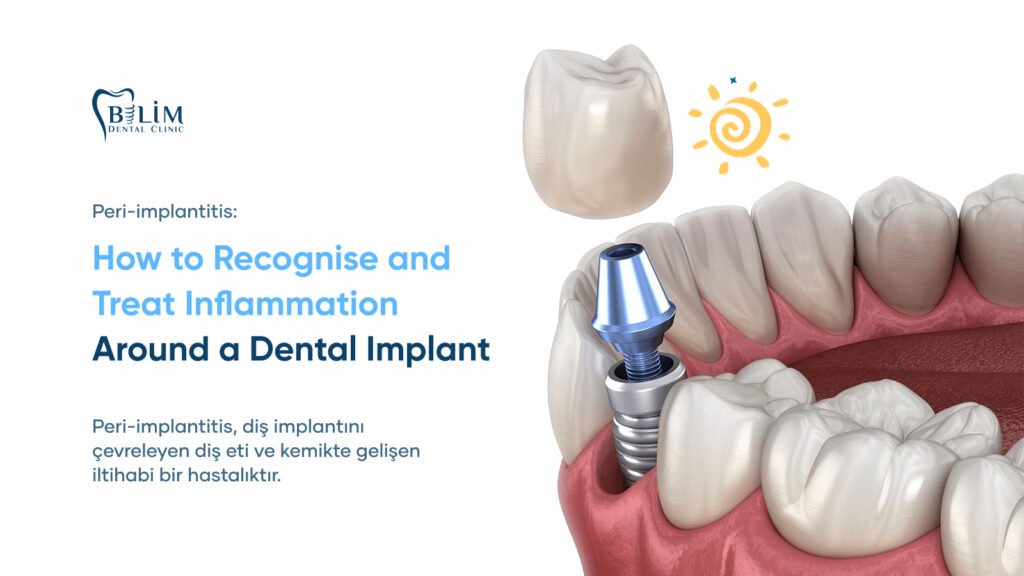
An implant succeeds when the titanium fuses with the bone, and smoking interferes with this. Studies report that smokers face roughly twice the risk of implant failure, or more, compared with non-smokers. Inflammation and bone loss around implants (peri-implantitis) are also more common in smokers.
Smoking is not an absolute barrier to implants, but patients need to understand the risks and ideally quit, or at least pause, during treatment. Smoking habits are always considered when planning implant treatment.
8. Dry Mouth, Dulled Taste, and Decay
Smoking reduces both the amount and quality of saliva. With less saliva, acids are not neutralised, bacteria are not washed away, and decay risk rises — especially at the gum line and on exposed root surfaces. Smoking also dulls taste and smell; many people notice food tastes different after quitting.
9. Oral Cancer and White Patches
The most serious consequence is a significantly higher risk of oral cancer, which rises further when smoking is combined with alcohol. Leukoplakia — white patches that cannot be wiped away and are considered potentially precancerous — is also more common in smokers, as is “smoker’s palate”, a whitening of the roof of the mouth with red dots.
See a dentist or doctor without delay if you notice:
- A sore that has not healed after three weeks
- White or red patches that cannot be wiped away
- A hard area or lump in the mouth
- Unexplained numbness of the tongue, cheek, or lip
- Difficulty swallowing or persistent hoarseness
- A lump in the neck
Regular dental check-ups play an important part in catching these changes early.
Are Hookah, E-Cigarettes, and Heated Tobacco Any Safer?
In Turkey, hookah (nargile) and e-cigarettes are popular, especially among young people, and many believe they are “less harmful” than cigarettes. The picture is not that simple.
| Product | Effect on Oral Health | Common Misconception |
|---|---|---|
| Cigarettes | Staining, gum disease, implant failure, oral cancer risk | “A few a day is harmless” |
| Hookah (nargile) | Very long smoke exposure per session; staining, gum disease, oral cancer risk | “The water filters it” |
| E-cigarettes | Nicotine products can affect gum blood flow; dry mouth and irritation reported | “It’s just water vapour” |
| Heated tobacco | Contains nicotine and other chemicals; long-term oral effects not yet fully known | “No burning, no harm” |
| Smokeless tobacco (chewing, snuff) | Gum recession, tooth wear, oral cancer risk | “No smoke, so it’s safe” |
Hookah water cools the smoke but does not filter out most harmful substances, and because a session usually lasts a long time, total exposure can far exceed a single cigarette. Nicotine-containing e-cigarettes can affect blood flow to the gums much as cigarettes do. In short, no tobacco or nicotine product is considered safe for oral health.
Smoking and Teeth After You Quit: What Improves?
The good news is that once you stop, the tissues of the mouth begin to recover:
- The first days and weeks: blood flow to the gums increases. Bleeding may increase for a while as hidden inflammation becomes visible — a good moment for a check-up.
- The first months: taste and smell improve noticeably and bad breath decreases.
- The long term: the risk of gum disease progressing falls over time and response to gum treatment improves. Oral cancer risk also declines over the years.
Lost bone and gum do not grow back on their own, but disease progression can be stopped and treatments become more successful. It is never too late to quit. Your family doctor can help you find support to stop smoking.
How Dentists Assess Smoking and Teeth Damage
In a smoker, the dentist looks well beyond the stains. Pocket depths around each tooth are measured, because deep pockets — not bleeding — are the real sign of disease. X-rays show the level of the bone supporting the teeth; in smokers, bone loss can be pronounced on the palate side of the upper front teeth and between the molars.
The soft tissues are examined too: the insides of the cheeks, the sides and underside of the tongue, the floor of the mouth, and the palate. White patches that cannot be wiped away, red areas, or sores that will not heal are referred for further investigation where needed.
At the end of the examination, the patient sees a concrete picture of how smoking and teeth health interact in their own mouth: which areas have bone loss, which teeth are at risk, and what the treatment priorities are. For many people, this concrete information becomes a strong motivation to quit.
How Smokers Can Protect Their Oral Health
When it comes to smoking and teeth, quitting is the most effective step. For those who are in the process of quitting, or have not yet managed it, these measures help limit the damage:
- More frequent check-ups: every three to four months rather than six, as your dentist advises
- Gum measurements: regular pocket checks even without bleeding
- Soft tissue screening: examination of the cheeks, tongue, palate, and floor of the mouth at every visit
- Fluoride toothpaste and good technique: twice a day with a soft brush — see our guide to toothbrush replacement and brushing technique
- Interdental cleaning: floss or interdental brushes every day
- Plenty of water: to reduce dry mouth
- A break before surgery: before and after extractions, implants, or gum surgery
Is Dental Treatment Different for Smokers?
Gum treatment: response to deep cleaning and gum treatment can be more limited than in non-smokers, so follow-up is closer.
Cosmetic treatment: crowns, veneers, and fillings can be placed, but staining around restorations and on natural teeth may continue. Porcelain and zirconia resist staining better than composite.
Surgery: a break from smoking is recommended before extractions, implants, and gum surgery, and avoiding cigarettes during healing reduces complications.
Implants: not ruled out, but risks must be discussed, planning must be careful, and regular maintenance afterwards is essential.
At Bilim Dental Clinic, we support patients who smoke without judgement, with a realistic treatment and follow-up plan. The aim is to protect their oral health as well as possible in their current situation.
Second-Hand Smoke and Children
The connection between smoking and teeth is not limited to the smoker. Some studies have reported more decay in the baby teeth of children exposed to tobacco smoke, and second-hand smoke also increases respiratory and ear infections in children.
Keeping homes and cars smoke-free is one of the simplest steps for children’s general and oral health. Smoking during pregnancy can harm the baby’s development and is strongly discouraged.
Frequently Asked Questions
Can whitening remove smoking stains?
Surface stains can be removed by professional cleaning and deeper discolouration largely reduced with whitening. If smoking continues, the stains soon return.
Do a few cigarettes a day still cause harm?
Yes. Risk increases with quantity, but even light smoking affects the gums and blood flow. There is no safe lower limit.
I’ve quit — why are my gums bleeding more?
Blood flow is returning, so previously hidden inflammation becomes visible. This is usually temporary and settles with a gum examination and cleaning.
Can I have implants if I smoke?
It is not an absolute barrier, but the risk of implant failure and inflammation increases. Your dentist will assess you individually; pausing smoking during treatment is recommended.
How long should I avoid smoking after an extraction?
Follow your dentist’s advice. In general, avoiding cigarettes in the first days reduces the risk of dry socket, and the longer the break, the better the healing.
Do e-cigarettes damage teeth?
Nicotine products can affect gum blood flow, and dry mouth and irritation are reported. Long-term effects are still being studied and they are not considered safe.
Is hookah less harmful than cigarettes?
No. The water does not filter the smoke, and long sessions can mean high exposure. It is harmful in terms of staining, gum disease, and oral cancer risk.
Does smoking cause tooth decay?
Indirectly, yes. Dry mouth and exposed root surfaces from gum recession make teeth more prone to decay.
How often should smokers see a dentist?
Usually every three to four months for a check-up and cleaning; your dentist will set the exact interval.
Will my gums go back to normal after quitting?
Lost bone and gum do not grow back on their own, but progression stops and response to treatment improves.
Dental and Gum Check-Ups for Smokers in Maltepe
The relationship between smoking and teeth often plays out silently, so regular check-ups matter especially for smokers. In this article we answered the questions our patients ask most: stains, gum disease, implant risk, hookah and e-cigarettes, and what improves after quitting.
At our clinic, we provide services in all areas of oral and dental health — from aesthetic dentistry and implant treatments to orthodontics and prosthetic applications — using modern technology and evidence-based, scientific approaches. Our experienced team of dentists creates a personalized treatment plan for every patient, aiming to build healthy, natural, and aesthetic smiles.
The dentists who will accompany you throughout this process:
- Dt. Ali Enes Öztürk
- Dt. Salman Taştan
- Dt. Hüseyin Kaya
- Uzm. Dt. Burak Güleç (Orthodontics Specialist)
- Dt. Cem Karaman
- Dt. Ayşe Sizer Çakar
- Dt. Zeynep Ece Okur (Pediatric Dentist)
For a dental and gum check-up, we invite you to visit Bilim Dental Clinic on Bağdat Caddesi in Maltepe, Istanbul. You can follow our latest updates on our Instagram account.
WhatsApp: +90 538 977 89 01