When it comes to your smile and your dental health, the material used to treat a cavity matters more than you might think. A composite filling is today's most popular choice in modern dentistry, thanks to its natural tooth-colored appearance and the fact that it can be completed in a single visit. So what exactly …
When it comes to your smile and your dental health, the material used to treat a cavity matters more than you might think. A composite filling is today’s most popular choice in modern dentistry, thanks to its natural tooth-colored appearance and the fact that it can be completed in a single visit. So what exactly is it, how is it applied, and how long does it last? This guide answers all your questions.
What Is a Composite Filling?
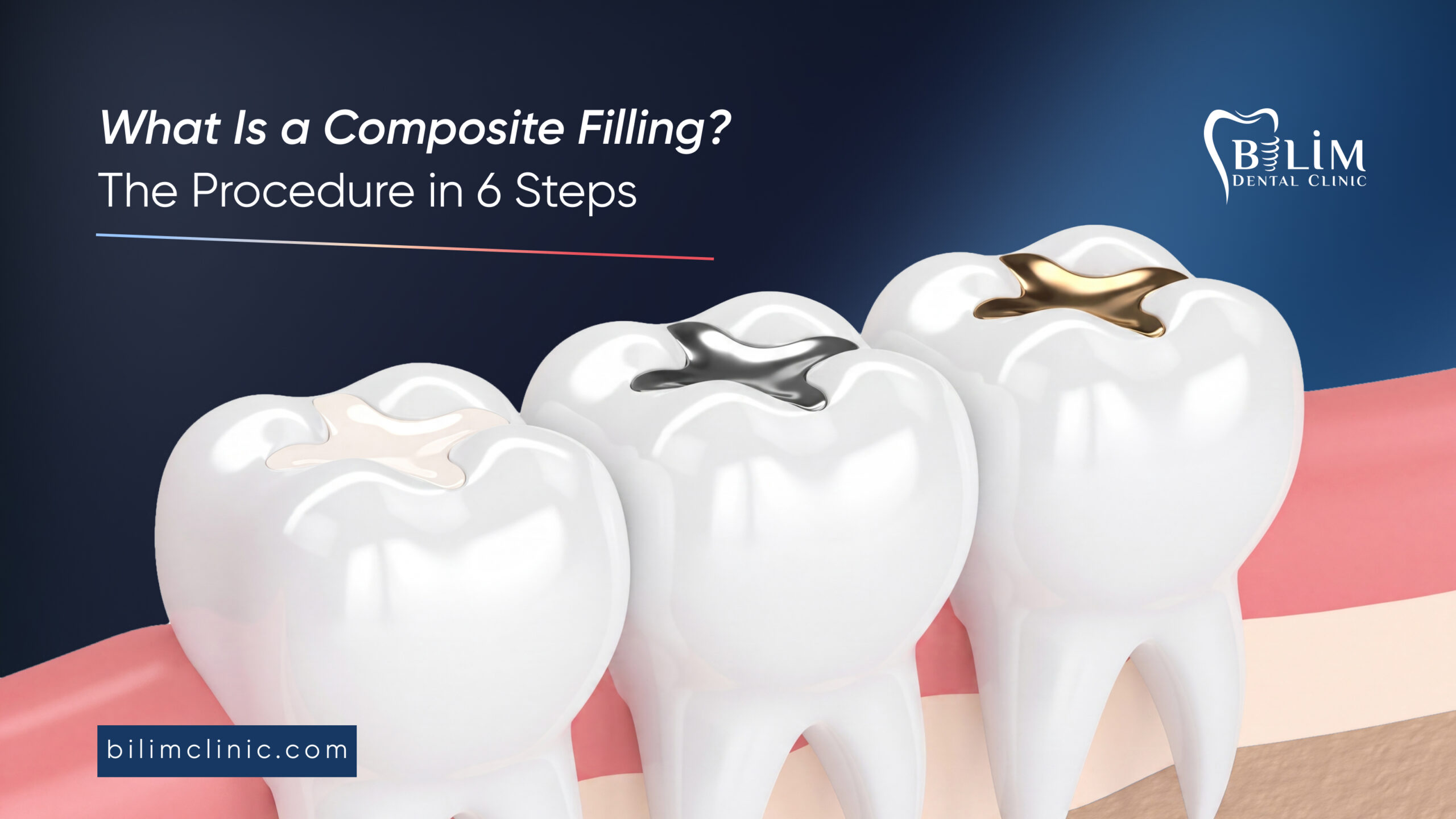
A composite filling is a tooth-colored restorative material used to repair teeth damaged by decay or fractures. It is also widely known as a white filling or tooth-colored filling. Made of acrylic resin reinforced with glass particles, the material is hardened within seconds using a special LED curing light.
Its greatest strength is that the shade can be matched precisely to your natural tooth color. As a result, the restored area becomes virtually indistinguishable from the rest of the tooth, which makes this material the first choice for front teeth and any tooth visible in your smile line. If your main concern is appearance rather than decay, you may also want to read our cosmetic dental filling guide.
When Is It Used?
Composite fillings are used not only to treat cavities but also in many other situations. The main areas of use include:
- Treating tooth decay: The cavity left after decay removal is filled and sealed.
- Repairing chipped or cracked teeth: Teeth broken by trauma are restored to their natural shape.
- Closing gaps (diastema): Spaces between front teeth can be closed.
- Correcting shape irregularities: Small or misshapen teeth are given their ideal form.
- Restoring worn surfaces: Areas worn down by grinding or acidic foods are rebuilt.
- Dental bonding: The front surface of teeth can be covered for smile enhancement.
As you can see, this treatment is a versatile solution used for both restorative and cosmetic purposes.
How Is a Composite Filling Done? The 6-Step Procedure
In most cases, the treatment is completed comfortably in a single visit. At Bilim Dental Clinic, the procedure follows these steps:
1. Examination and Planning
The dentist first performs an intraoral examination and takes an X-ray if needed. The depth of the decay and the overall condition of the tooth are assessed to create a treatment plan.
2. Local Anesthesia
Local anesthesia is applied to the treatment area so you feel no pain during the procedure.
3. Decay Removal
The decayed tissue is completely removed with specialized instruments. Only the damaged area is treated — healthy tooth structure is preserved.
4. Tooth Preparation
A bonding agent is applied to the cleaned area, allowing the material to adhere strongly to the tooth.
5. Placement and Curing
The resin, selected in a shade matching your tooth, is applied in thin layers. Each layer is cured with an LED light, giving the restoration maximum strength.
6. Shaping and Polishing
Finally, the restoration is contoured to match the tooth’s natural anatomy. The bite is checked, and the surface is polished for a smooth, glossy finish.
The entire process takes 30–60 minutes on average, and you can return to your daily routine the same day.
What Are the Benefits of Composite Fillings?
Several important advantages set this material apart from other filling types:
- Natural, aesthetic look: Matches your tooth color, so it goes unnoticed.
- Single-visit treatment: Most cases are finished the same day.
- Minimal tooth removal: Less healthy structure is removed than with amalgam.
- Mercury-free: Contains no metal or mercury, making it biocompatible.
- Repairable: Minor damage over time can be fixed without replacing the whole restoration.
- Versatile: Suitable for both front and back teeth, for treatment or cosmetics.
Composite vs. Amalgam Fillings: What’s the Difference?
The gray metal amalgam fillings commonly used in the past have largely been replaced by tooth-colored restorations. Amalgam is made of a metal alloy and stands out visibly on the tooth, while a composite filling blends in completely, making it far superior aesthetically. Placing amalgam also requires drilling a larger cavity, whereas resin bonds chemically to the tooth, preserving healthy tissue. Being mercury-free makes it the safer option as well.
If decay has progressed deep enough to affect the nerve, a filling alone may not be sufficient — in that case, root canal treatment may be required. An examination by a dentist is essential for the correct diagnosis.
How Long Does a Composite Filling Last?
When properly placed and well maintained, the average lifespan is 5 to 10 years. This depends on the size of the restoration, the tooth it is on, your oral hygiene, and your eating habits. Regular dental check-ups can significantly extend its life.
5 Tips to Make It Last Longer
- Brush at least twice a day and floss daily.
- Avoid cracking hard objects (pens, ice, nutshells) with your teeth.
- Limit staining habits such as tea, coffee, and smoking.
- Use a night guard if you grind your teeth (bruxism).
- Visit your dentist every six months for a routine check-up.
Aftercare: What to Watch For
Because the material hardens instantly under the curing light, you can eat right after the procedure. However, until the anesthesia wears off (about 2–3 hours), be careful not to bite your cheek or lip. Mild sensitivity to hot and cold is normal in the first few days and usually resolves on its own. If sensitivity persists, contact your dentist.
Composite Filling Cost in 2026
The composite filling cost varies depending on the size of the restoration, the number of teeth treated, the depth of the decay, and the quality of the material used. According to the American Dental Association, composite restorations are among the most frequently performed procedures in general dentistry, and the exact price is always determined after a clinical examination. Book a consultation at our clinic for a personalized quote.
Frequently Asked Questions (FAQ)
Does getting a composite filling hurt?
No. The procedure is performed under local anesthesia, so no pain is felt. Mild sensitivity afterward is possible but temporary.
When can I eat after the procedure?
Since the material cures instantly under the LED light, you can eat as soon as the anesthesia wears off.
Do white fillings change color?
High-quality materials offer strong color stability. Heavy tea, coffee, or tobacco use may cause slight discoloration over time, which regular polishing can reverse.
Can it be applied to front teeth?
Yes — thanks to its aesthetic properties, it is the ideal option for front teeth. It is also frequently used for gap closure and bonding.
Is it safe during pregnancy?
Yes. Because it contains no mercury, it can be safely applied during pregnancy. Still, consult your dentist about the best timing.
Composite Filling Treatment at Bilim Dental Clinic
 A composite filling, when placed with the right material and expert hands, is an aesthetic treatment that can serve you flawlessly for years. At Bilim Dental Clinic, our experienced dentists and state-of-the-art equipment prioritize both the health and the beauty of your teeth. You can explore our other articles on our blog page.
Book your appointment today for decay, fractures, or cosmetic concerns — let’s restore your smile to its natural best, together.
 +90 538 977 89 01 (WhatsApp)
  @bilimdentalclinic
Bilim Dental Clinics | İstanbul · Samsun İlkadım · Samsun Atakum · Sinop Ayancık · Samsun Vezirköprü